 +86-573-85605006
 zhouyueliang@L-jie.com
A school backpack that has carried a lunch box, a leaking water bottle and a rain-soaked gym kit for nine months does not smell like a manufacturing defect. It smells like biology. Crumbs, sweat, spilled juice and damp clothing all feed the same process, and once that smell settles into the foam and the lining, no amount of airing will shift it.
The good news is that most fabric backpacks can be brought back to life at home in under an hour with lukewarm water, a mild liquid detergent and a soft brush. What decides whether the job works is not the brand or the price, but three construction details: the finish on the fabric, the type of foam inside the straps and back panel, and what the care label actually says. Understand those three and backpack cleaning stops being a gamble. Ignore them and a single wash cycle can turn a solid pack into a limp, peeling shell.
Content
From the repair and return side of the bag trade, the damage follows a short list of patterns. Heat, harsh chemistry and long soaking cause almost all of it.
| Common washing mistakes, the damage they cause, and the safer alternative for fabric backpacks. | ||
| Machine washing on a normal cycle | Water-repellent finish cracks, padding twists, straps tangle | Hand wash, or a gentle cycle in a mesh bag |
| Water above 40 degrees Celsius | Coating breaks down, seam glue softens, dark dyes bleed into light panels | Lukewarm water at 30 to 40 degrees |
| Bleach and strong solvents | Colour loss, printed logos peel, plastic hardware turns brittle | Diluted mild liquid detergent only |
| Soaking overnight | Water reaches the foam, and mildew starts within days | Soak for 15 to 30 minutes, no longer |
| Tumble drying | Buckles warp, foam loses shape, coatings stick to the drum | Air dry upside down, in shade |
This sequence is the one we recommend to buyers who ask how a pack should be maintained after purchase. It suits polyester and nylon backpacks with a polyurethane backing, which covers the majority of everyday, school and travel bags.
One detail worth knowing from the production side: never put oil on a zipper that runs over fabric. Oil creeps into the tape, stains the lining and collects grit, which is exactly what wears a slider out. Paraffin wax or a silicone stick, applied thinly, keeps the teeth moving without the mess.
Fabric type alone does not answer this question. Construction decides it.
If you are unsure, clean a small hidden area first, such as the inside of the bottom panel, then let it dry and check for colour transfer or a dulled surface before going further.
Laptop backpacks are the one category where full immersion is usually the wrong call. The device sleeve is often foam laminated to a soft lining, and once water gets between the layers it can take days to dry, which is long enough for a musty smell to settle in. Wipe the exterior with a damp cloth, brush the strap edges, and vacuum the laptop compartment instead of soaking it. If the sleeve is removable, take it out and hand wash the shell as normal. Give the compartment zipper some attention too: grit in the teeth is the most common reason a slider jams halfway, and a jammed slider is what actually scratches a device edge.
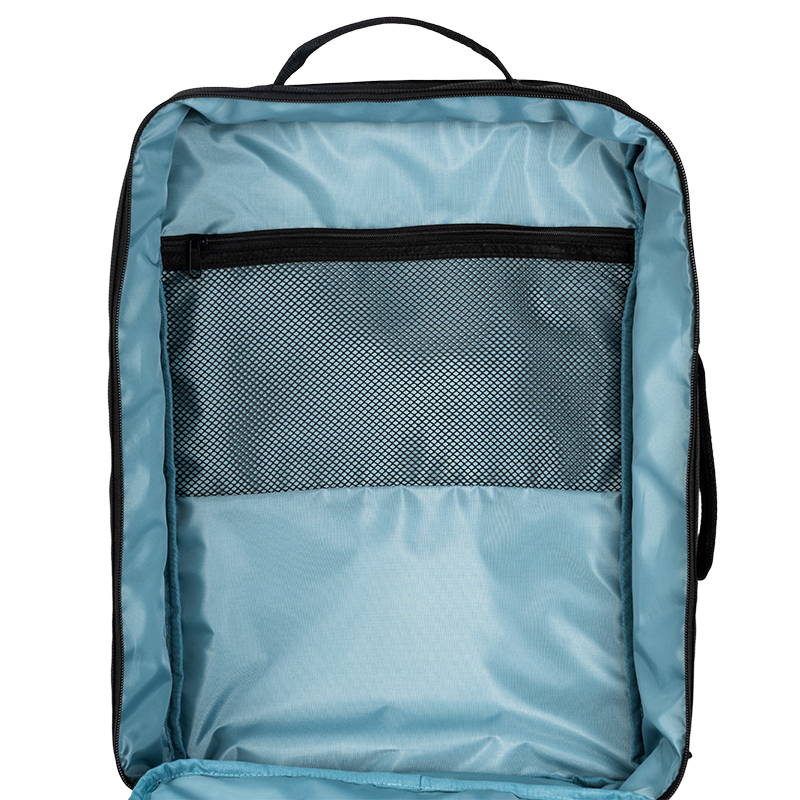 LJ23-003 Multi-Purpose Travel Laptop BackpackA durable travel and laptop backpack with padded 15.6-inch compartment, multiple organizer pockets, and reinforced polyester Oxford construction for work, school, or weekend trips.View Product →
Children's packs collect more food, drink and playground dust than any other style, and they also get washed most often. Polyester oxford shells handle hand washing well, but the prints and pale panels do not handle heat or bleach. Keep the water at around 30 degrees, avoid scrubbing printed areas with a stiff brush, and dry in shade, because sunlight fades a bright panel faster than any detergent. Since the bag sits against a child's back and usually carries food, rinse twice and confirm the inside is completely dry before the next school day. If the bottom corners still feel cool and damp after 24 hours, it is not dry enough.
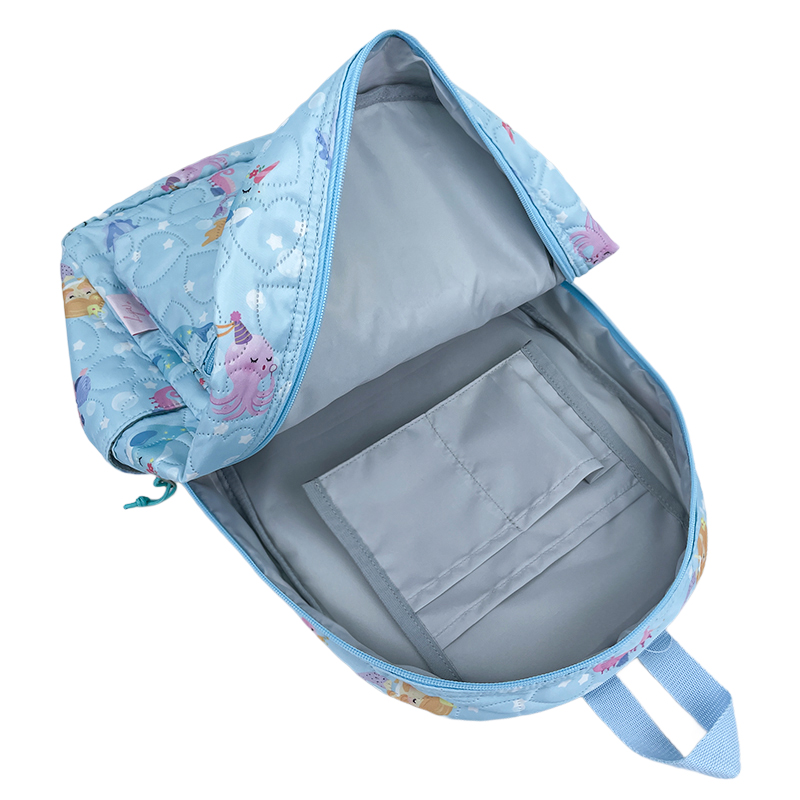 LJ24-017 Cute Lightweight Unisex Children's BackpackA lightweight unisex children's backpack with breathable ergonomic straps, playful quilted fabric, ample organization, and a water-resistant base for school and everyday outings.View Product →
Insulated packs need a different routine, because the risk is not dirt but bacteria. Melted ice water, leaked milk and food spills sit in the liner, and a warm car turns that into a smell within a day. Wipe the food-contact liner with warm water and a little mild detergent, or a diluted white vinegar solution, and never use bleach on it. Pay attention to the seam where the liner meets the zipper tape, since that channel collects liquid. Dry the bag fully open and upside down, with the liner propped apart so air can move through it. A cooler stored closed while still damp will smell within a week, no matter how carefully it was washed.
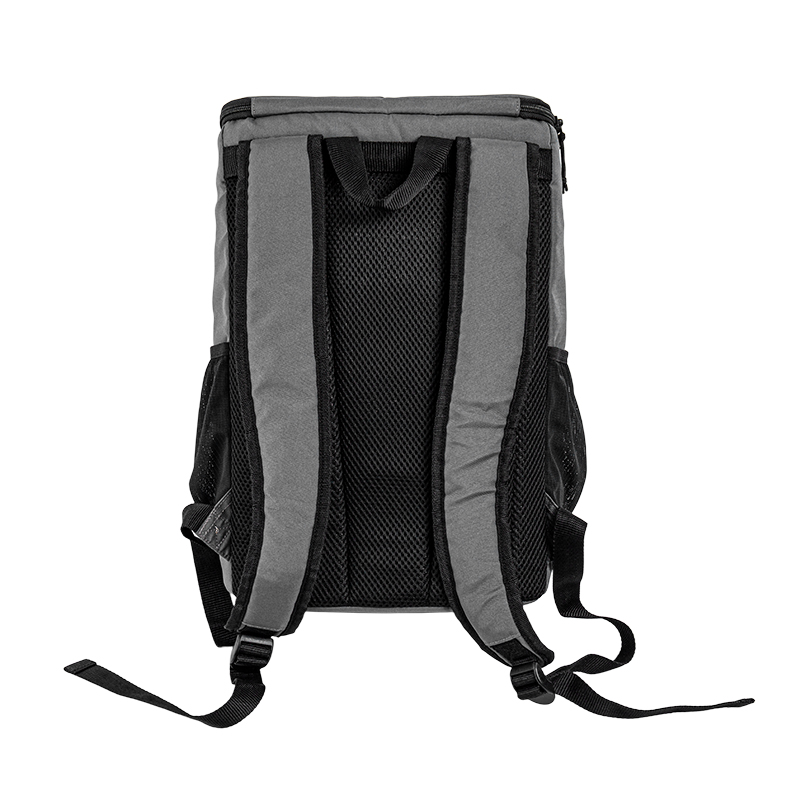 LJ23-CB006 Large Capacity Hiking Backpack CoolerA large-capacity hiking backpack cooler with insulated pearl-cotton compartment, waterproof heat-sealed liner, and durable Oxford polyester for camping, picnics, and outdoor trips.View Product →
Drying is the step that ruins most cleaning jobs, and heat is the enemy. Air movement matters far more than warmth: a pack hung in a dry room with a fan running dries in about a day at 20 degrees, while the same pack left in a warm, still bathroom can stay damp for three.
When two packs sit at the same price, the one that survives regular backpack cleaning is almost always the one with better hidden details. Closed-cell foam padding dries quickly and keeps its shape; open-cell foam soaks up water and odour. Coated or reverse-coil zippers resist grit better than open nylon coils, and a removable hip belt or frame sheet means you can wash the shell without worrying about rigid parts. Dark grey or black linings also hide stains and reduce the risk of dye transfer onto light-coloured contents. Our guide on how to choose a backpack covers the sizing and feature side of the same decision.
Construction is something we deal with daily: our factory in Pinghu builds backpacks, laptop bags, cooler bags and shopping bags, and ships more than three million pieces a year against quality, social compliance and retail certifications. Buyers who specify closed-cell padding, removable components and accurate care labels get fewer returns and fewer complaints about smells, because the customer can actually clean the product. You can review our backpack and bag range to see how those details are specified in practice.
Backpack cleaning is really a materials question dressed up as a chore. The rule that covers nearly every case is simple: use the least heat and the least chemistry that will do the job, rinse thoroughly, and dry completely before the bag goes back into service. If you would hesitate to wash a wool sweater in the water you have prepared, it is too hot or too strong for a backpack as well.
1. Understanding Shopping Bags Shopping bags are essential tools in modern retail and daily life. They serve as a convenient way to carry groceries, c...
View More1. Introduction In our increasingly mobile and digital world, the laptop has become the central hub of our professional and personal lives. It connect...
View MoreLearn how to choose the perfect crossbody water bottle sling bag — sizing, materials, wearing styles, packing checklist, top features to prioritize, a...
View MoreAn innovative enterprise that continuously strives to have its own brand through its own efforts. bag production factory
Phone: +86-13906735273
Tel: +86-573-85605006
Email: zhouyueliang@L-jie.com
Email: sunny@L-jie.com
Add: No.99 Xinchen Road. Xindai, Pinghu, Zhejiang, China
Copyright© 2025 Pinghu Liangjie suitcase & bag Co., Ltd. All Rights Reserved.
 Custom Luggage Bags Manufacturers


 English
 Français
 Español
 Deutsch
 عربى
عربى