 +86-573-85605006
 zhouyueliang@L-jie.com
A sample gets approved from a photo. Six weeks later the bulk shipment arrives with a strap anchored 8 mm lower than the approved piece, a cooler that holds ice for four hours instead of seven, and a carton spec that lets 6% of units arrive scuffed. None of those failures happened on the sewing floor. They were decided in the first two weeks of bag product development, when nobody wrote the numbers down.
The reliable sequence is short: define the spec in writing, build a prototype, test it against real use, freeze a pre-production sample, then run bulk against that sample. Each stage is signed off before the next begins. Everything below explains how to keep that sequence from collapsing into guesswork.
Content
Development is not the same as design. Design decides what the bag looks like and who it is for; development proves it can be sewn, packed, tested, and shipped at a target cost without losing the features that sold it in the first place.
A complete program usually covers:
Packaging belongs on that list more often than buyers expect. A bag can pass final inspection and still arrive unsellable if the polybag, carton drop rating, and barcode placement were left to the forwarder to sort out.
If a factory has to guess, it will guess in the cheapest direction. A one-page spec with tolerances removes most of that room, and it takes far less time to write than a single sample round takes to correct.
| A workable spec sheet for soft bags, with the tolerances buyers normally accept in bulk. Anything left blank becomes the factory's default choice. | ||
| Finished dimensions | Length × width × depth, measured flat or filled | ±5 mm on soft goods |
| Base fabric | Cloth type, coating, and weight (e.g. 600D polyester Oxford, PU backed) | ±3% weight between lots |
| Insulation | Foam type and thickness, lining film | Thickness must hold after cleaning cycles |
| Zippers | Gauge, type, puller, tape color | No substitution without written approval |
| Webbing and straps | Width, density, breaking strength | ±2 mm width |
| Stitching | Stitch density, thread size, seam type | 8–10 stitches per inch is typical |
| Hardware | Buckles, D-rings, adjusters, rated load | Test at 1.5× rated load |
| Labels and packing | Carton count, polybag, barcode format | Buyer-specific, must be approved |
The tolerance column is where experienced buyers spend their attention. Soft goods move: a sewn panel stretches under the needle, coated fabric shrinks slightly after lamination, and foam compresses. A ±5 mm tolerance on a finished dimension is normal. Demanding ±1 mm on a 600D Oxford bag will produce rejections no factory can avoid.
These stages get confused constantly, and the confusion is expensive. A prototype proves the concept. A pre-production sample proves the line can repeat it. Bulk proves nothing — it simply follows whichever of the two you approved.
| Development stages for soft bags, what each one is meant to prove, and the calendar days usually needed. | ||
| Stage | What it proves | Typical lead time |
| Pattern mock-up | Proportion, panel count, seam placement | 3–5 days |
| First prototype | The design can be sewn as drawn and materials behave | 7–14 days |
| Revised sample | Fit, load, and hardware issues are resolved | 5–10 days per round |
| Pre-production sample | The production line can repeat the approved result | 10–15 days |
| Bulk run | Consistency against the approved standard | 30–45 days |
Most cost is locked in by four choices, and none of them is the logo print.
600D polyester Oxford with a PU backing is a common starting point for backpacks, laptop bags, and insulated totes: abrasion resistance, water resistance, and a sensible price per meter. Moving to 210D or 300D cuts weight and cost for linings and promotional bags, but the same fabric will not survive the same abrasion test.
Foam thickness drives cooler performance. A lunch bag with 5 mm of PE foam holds cold for a few hours in moderate conditions; a hard cooler with 15–20 mm of foam and a molded shell holds it considerably longer at a higher unit cost. Seal quality at the lid matters as much as thickness, because a well-insulated body with a leaking zipper line still loses cold fast.
#5 coil zippers are standard on daypacks, while #8 or molded-tooth zippers suit cooler lids that open wide and bags carrying heavy loads. Ask for a rated load on every buckle and D-ring, and specify strap webbing by width and density together with the number of bartacks at each anchor point — that combination decides whether a backpack survives a 15 kg commute.
Certificates are not tests. ISO 9001 covers a quality management system, Sedex covers ethical trade data, and retailer approvals confirm a factory's audit status — none of them tells you whether your 24 L cooler holds ice through a beach day. Ask for the test report on the model, not on the factory.
A realistic calendar runs 6–10 weeks from signed spec to approved pre-production sample, before bulk production starts.
The most common delay is not sewing — it is approval. Every unanswered comment email costs three to five days, and two of those can push a program past a retail window.
The right factory answers spec questions with numbers and can show you a sample room, not just a catalogue. Check three things: whether development sits in-house or is subcontracted, whether the factory can sew from your drawings and reference samples, and whether its certifications match your retail channel.
Liangjie, based in Pinghu, Zhejiang, has operated as a bag factory and trading company since 1999, with a site of more than 9,000 square meters, roughly 110 employees, and annual output above 3 million bags across cooler bags, backpacks, laptop bags, lunch bags, and shopping bags. An in-house development department works on new materials, and the factory builds samples from customer sketches, drawings, or supplied samples. Certifications include an ISO quality system, Aeon, Sedex, and military approval, which matters if your channel audits supplier social compliance and factory conditions.
Starting from a proven platform often saves a full sample round. Three examples from the current line — a large-capacity hiking backpack cooler, a multi-purpose travel laptop backpack, and a lightweight lunch bag — work well as customization bases:
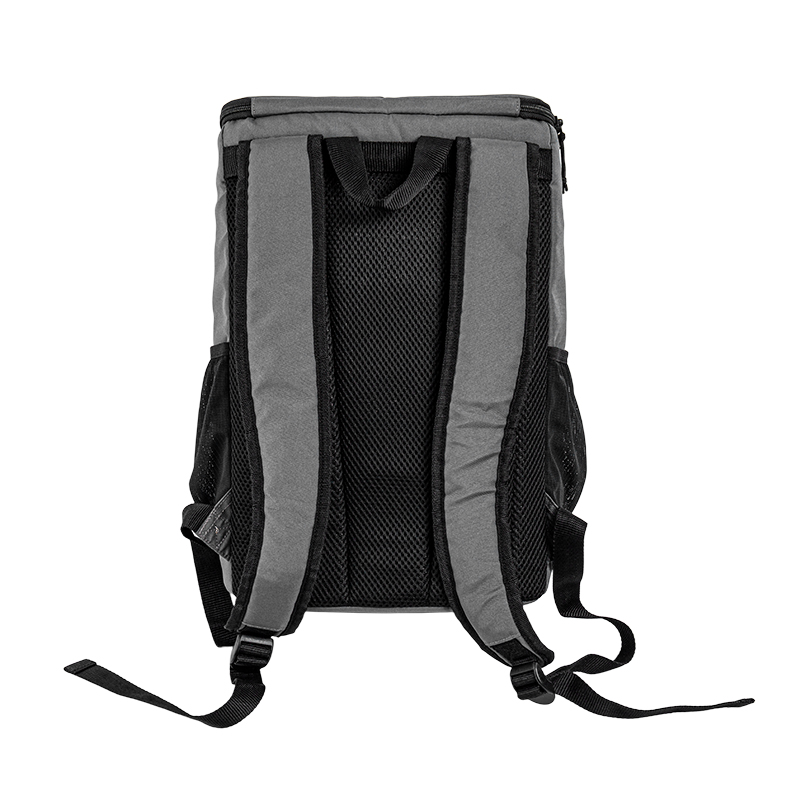 LJ23-CB006 Large-Capacity Hiking Backpack CoolerA proven customization base combining backpack portability with insulated cooler storage for hiking, camping, picnics, and other outdoor outings.View Product →
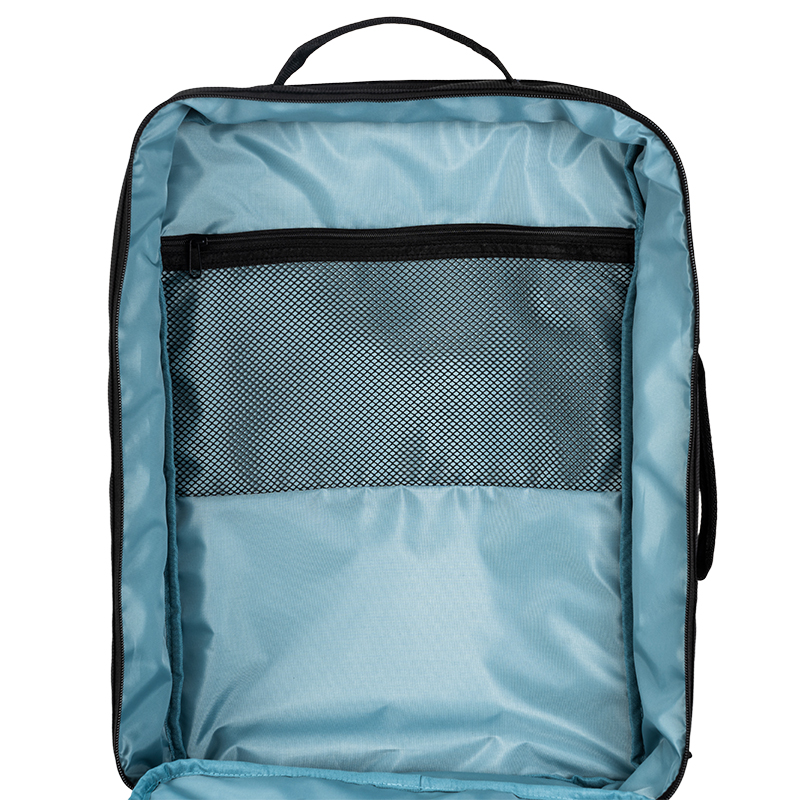 LJ23-003 Multi-Purpose Travel Laptop BackpackA wholesale laptop backpack with a padded 15.6-inch compartment and organized pockets, suited to work, school, or weekend travel customization.View Product →
 LJ25-CB001 Lightweight Portable Insulated Lunch BagA compact wholesale lunch bag with thermal insulation and a water-resistant lining, useful as a customization base for work, school, or outdoor use.View Product →
The opening email usually decides how fast a program moves. Send five things: a sketch or reference sample, the intended load and use conditions, target FOB and order quantity, the destination market with any labeling rules, and a delivery date.
Within a week you should have a cost estimate, a material proposal, a sample date, and a list of open questions. If the reply is a catalogue and a price range with no questions attached, development work has not actually started.
Send drawings, reference samples, or a current product you want to improve through our contact page, and you will get a spec review before any sampling cost is quoted. For background on cooler performance expectations, this overview of the advantages of insulation bags is a useful reference when you write your test criteria.
1. Understanding Shopping Bags Shopping bags are essential tools in modern retail and daily life. They serve as a convenient way to carry groceries, c...
View More1. Introduction In our increasingly mobile and digital world, the laptop has become the central hub of our professional and personal lives. It connect...
View MoreLearn how to choose the perfect crossbody water bottle sling bag — sizing, materials, wearing styles, packing checklist, top features to prioritize, a...
View MoreAn innovative enterprise that continuously strives to have its own brand through its own efforts. bag production factory
Phone: +86-13906735273
Tel: +86-573-85605006
Email: zhouyueliang@L-jie.com
Email: sunny@L-jie.com
Add: No.99 Xinchen Road. Xindai, Pinghu, Zhejiang, China
Copyright© 2025 Pinghu Liangjie suitcase & bag Co., Ltd. All Rights Reserved.
 Custom Luggage Bags Manufacturers


 English
 Français
 Español
 Deutsch
 عربى