 +86-573-85605006
 zhouyueliang@L-jie.com
A buyer opens a sample box and finds a clear, glossy tote with welded edges. The first question is usually whether the material is PVC and whether it will pass the target market’s rules. Bag PVC material can deliver strong transparency, waterproofing, and abrasion resistance at a competitive cost, but flexible PVC is not a single commodity. Performance depends on film gauge, plasticizer level, backing, and compliance limits. A sample that feels right in a showroom can still fail a cold-crack test, an odor review, or a phthalate check if the brief is vague.
Content
PVC stands for polyvinyl chloride. In bag manufacturing, the term usually refers to flexible PVC film, often called clear vinyl, or to PVC-coated fabric bonded to polyester, nylon, or mesh. Rigid PVC sheet is a different material with a different use. Flexible film contains plasticizers to make it soft, and that is where many sourcing decisions begin: more plasticizer gives a softer hand but can increase migration, odor, and long-term stiffening.
Clear PVC is popular for cosmetic bags, toiletry pouches, beach bags, and document wallets because it shows the contents and wipes clean. PVC-coated fabric is used where a woven look or higher tear strength is needed. Thickness is usually quoted in millimeters or mils. A cosmetic pouch may use 0.2 mm to 0.3 mm film, while a tote or protective cover may use 0.5 mm or more. A small reduction in gauge can lower cost, but it also changes seam strength, stiffness, and the feel the customer approves.
| Form | Common bag use | Main strength | Watch-out |
|---|---|---|---|
| Clear vinyl film | Cosmetic pouches, toiletry kits, document wallets | Transparent, weldable, easy to wipe | Plasticizer migration, scuffs, cold stiffness |
| PVC-coated fabric | Beach totes, tool bags, trim panels | Tear strength, woven look, printability | Heavier, lamination bond, recycling |
| Expanded PVC foam | Structured cases, protective inserts | Shape retention, cushioning | Bulk, compression set |
| Rigid PVC sheet | Display boxes, stiff panels | Dimensional stability, clarity | Cracking, not flexible |
PVC earns its place when the brief calls for a clear, waterproof, wipe-clean surface that can be welded rather than stitched. High-frequency or heat welding fuses the material and can create a continuous seal, which is useful for toiletry kits, beach bags, and protective covers. PVC also accepts print, can be tinted, and resists many everyday chemicals. For promotional and retail bags, raw material cost is often lower than TPU or treated woven fabric.
The limitations are practical. Flexible PVC can stiffen in cold weather, yellow with UV exposure, and show scuffs on high-gloss surfaces. Plasticizers can migrate into other materials or create odor in a closed carton. Recycling is difficult because PVC is a chlorinated polymer and is rarely part of flexible-film collection. Food-contact use needs specific migration testing; a generic “PVC” statement is not enough for a lunch bag or cooler liner.
Write the specification around the failure you cannot accept, not just the color. The following checks cover the issues that most often appear in bag PVC material approvals.
For food-contact or children’s products, request test reports that match the final construction, not just the resin. Adhesives, inks, and edge treatments can change the result.
PVC is often compared with TPU, PEVA, and PU-coated fabric. They can look similar in a photo but behave differently in production, compliance, and end-of-life.
| Material choice should follow the bag’s use phase, not only its showroom appearance. | ||||
| Material | Water resistance | End-of-life | Typical bag use | Main trade-off |
| PVC | Excellent | Difficult; chlorinated | Clear pouches, totes, cosmetic bags | Low cost; plasticizer and recycling concerns |
| TPU | Excellent | More recyclable in some streams | Clear bags, outdoor cases | Higher cost; processing control |
| PEVA | Good | Chlorine-free | Cooler liners, toiletry bags | Less transparent; heat sensitivity |
| PU-coated fabric | Good | Not mono-material | Backpacks, laptop bags | Hydrolysis in humid storage |
TPU is usually chosen when clarity and a more flexible compliance story justify a higher material cost. PEVA is common for cooler liners and toiletry bags where a chlorine-free material is preferred, but it has different heat sensitivity. PU-coated fabric suits backpacks and laptop bags because it drapes over a woven substrate, though hydrolysis in humid storage can be an issue. No material is automatically better; the right choice follows the bag’s use, cleaning routine, and target market.
PVC is strongest in transparent and wipe-clean formats: cosmetic and toiletry bags, beach totes, promotional shopping bags, document pouches, and clear event bags. It can also appear as a coating on a woven substrate for bottom panels or trim. For reusable shopping programs, a woven or nonwoven alternative may better match a sustainability claim. Our shopping bag types and sustainability guide compares common constructions, and the folding shopping bag below shows a reusable woven option.
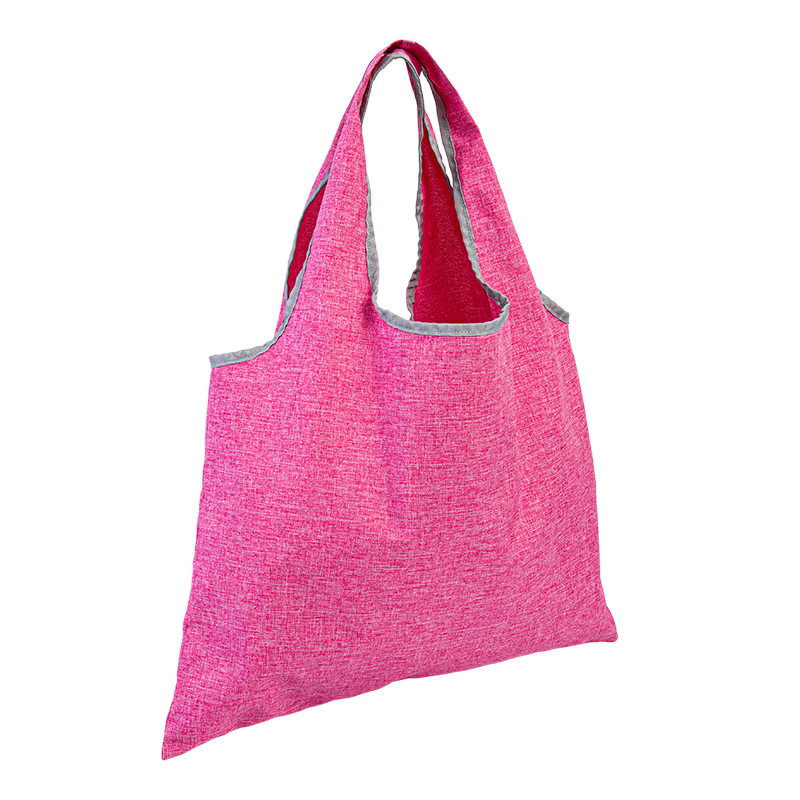 LJ24-002 Foldable Large-Capacity Reusable Shopping BagA foldable 50.5 x 39 cm shopping bag for supermarket trips and storage, offering a reusable alternative to single-use bags with compact portability.View Product →
For insulated food bags, PVC liners are possible but should not be the default. Food-contact rules, odor, and migration testing make PEVA or EVA liners more common. The insulated tote below illustrates a typical soft cooler construction; confirm the liner specification before approving any PVC variant.
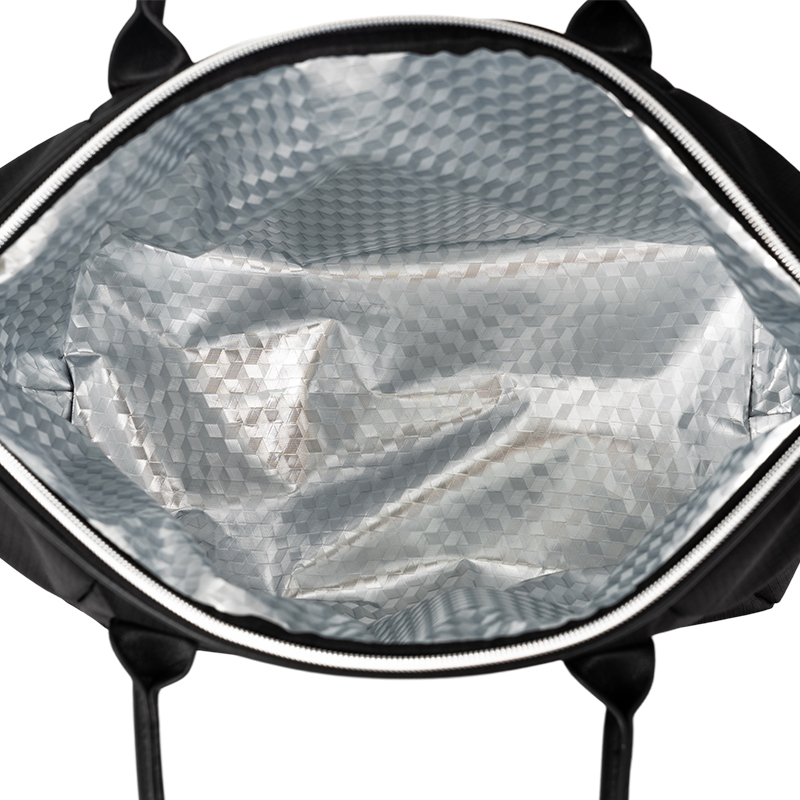 LJ23-CB004 Classic Insulated Grocery Shopping ToteA reusable insulated tote with PEVA lining and pearl-cotton insulation for groceries, picnics, and travel; check liner specifications for food-contact use.View Product →
Approve the material before you approve the bag. Keep a retained sample of the approved film and record its supplier, batch, gauge, color, and test reports. During production, check roll direction, surface defects, weld settings, and print registration. For clear PVC, inspect under both cool and warm light because haze and tint can look different. Review whether bags are packed flat or folded; a tight fold in cold weather can create permanent creases.
Ask for a pre-production sample using the final film, ink, and welding parameters. A lab report on resin alone does not prove that the finished bag meets the requirement. If the bag has handles, zippers, or binding, test the complete assembly with a static load and a short drop. If the product will be stored in a hot warehouse or shipped in winter, add a heat or cold cycle to the approval plan.
PVC pricing moves with resin, plasticizer, and additives. A low-migration or phthalate-free grade can cost more and may have a longer lead time than standard clear film. Anti-UV packages, color matching, and backing lamination also change cost. Those extras are not automatically necessary. A promotional tote for a summer event needs different protection from a cosmetic bag that will sit in a warm bathroom for two years.
Compliance should be written into the purchase order: restricted phthalates, heavy metals, odor limit, cold-crack temperature, and any food-contact or child-safety standard. For children’s bags, avoid cadmium stabilizers and confirm phthalate limits with a report covering the final printed and welded part. For EU buyers, keep a REACH SVHC declaration on file. For US buyers, match the test plan to the intended user and use.
A sound PVC bag brief starts with the use case, not the material name. Define whether the bag needs clarity, food contact, cold-weather flexibility, or a sustainability claim, then set gauge, compliance, and seam tests around that decision. Compare PVC with TPU, PEVA, and coated fabric before locking the design. If you are weighing options for a tote, cooler bag, or cosmetic pouch, discuss your specification with our team and send the drawing, target thickness, and market requirements.
1. Understanding Shopping Bags Shopping bags are essential tools in modern retail and daily life. They serve as a convenient way to carry groceries, c...
View More1. Introduction In our increasingly mobile and digital world, the laptop has become the central hub of our professional and personal lives. It connect...
View MoreLearn how to choose the perfect crossbody water bottle sling bag — sizing, materials, wearing styles, packing checklist, top features to prioritize, a...
View MoreAn innovative enterprise that continuously strives to have its own brand through its own efforts. bag production factory
Phone: +86-13906735273
Tel: +86-573-85605006
Email: zhouyueliang@L-jie.com
Email: sunny@L-jie.com
Add: No.99 Xinchen Road. Xindai, Pinghu, Zhejiang, China
Copyright© 2025 Pinghu Liangjie suitcase & bag Co., Ltd. All Rights Reserved.
 Custom Luggage Bags Manufacturers


 English
 Français
 Español
 Deutsch
 عربى