 +86-573-85605006
 zhouyueliang@L-jie.com
Water beading on a sample is not proof that a bag is waterproof. A common failure looks like this: the shell sheds a light shower, but the stitched seam above a laptop sleeve wicks water inward, and the zipper tape holds moisture against the lining. For buyers specifying bag waterproof material, no single fabric name guarantees performance. The result depends on the base cloth, coating or lamination, seam treatment, zipper choice, and use case. That is good news for sourcing: instead of chasing a label, define a small set of performance requirements and test the assembled bag.
Content
Water-resistant material slows water entry. Waterproof material is expected to prevent liquid water from passing through under stated conditions. The difference matters because a bag sold as water-resistant can still fail when a packed load presses fabric against a wet bench, or when rain runs down a seam for ten minutes.
Ask for performance data rather than adjectives. Hydrostatic head testing reports the water pressure a fabric resists, usually in millimeters. A light urban bag may be specified around 1,500–3,000 mm. A commuter backpack or cooler bag used in steady rain often needs 5,000–10,000 mm. Prolonged exposure or pressure can justify higher figures, but the number is only meaningful when the test method and finished construction are stated.
Spray rating is a different check. It shows how well the outer surface repels water, but it does not prove the fabric or seams are waterproof. A strong spray rating with an unprotected zipper still leaves you with a water-resistant bag. Test the finished bag, not only the fabric roll.
Most soft bags start with a woven synthetic base cloth, then add a coating, lamination, or water-repellent finish. The table compares common materials; the protection column describes the usual approach, not a guaranteed rating.
| Typical roles and limits of common bag waterproof materials; final performance depends on coatings, seams, and construction. | ||||
| Material | Usual role | Water protection | Suitable bags | What to verify |
| Polyester | Base cloth | PU coating or DWR | Shopping bags, laptop bags | Coating adhesion, flex cracking |
| Nylon | Strong base cloth | PU or TPU coating | Outdoor packs, cooler bags | Hydrolysis, seam wicking |
| Oxford cloth | Basket-weave polyester or nylon | PU coating | Hard coolers, totes, luggage | Denier, coating weight, sealed seams |
| PVC | Film or coating | Fully waterproof, heavy | Budget rain bags, coolers | Odor, cold stiffness, phthalates |
| TPU | Film or lamination | Waterproof and flexible | Outdoor packs, cooler liners | Thickness, welding, hydrolysis |
| RPET | Recycled polyester base | Same coating options as polyester | Eco-positioned shopping bags | Recycled content certificate, coating consistency |
Do not accept “TPU,” “Oxford cloth,” or “waterproof polyester” as a complete specification. Ask for fabric weight or denier, coating type and weight, hydrostatic head, seam method, and zipper construction. A 600D Oxford cloth with a thin acrylic finish is a different product from the same cloth with a TPU film and welded seams, even if both are called waterproof bag material.
Coatings are where many purchase decisions are won or lost. PU coating is flexible and common on polyester and nylon bags; quality varies with coating weight, adhesion, and resistance to flex cracking. PVC gives a heavy, fully waterproof film, but it can stiffen in cold weather, carry odor, and raise plasticizer compliance questions. TPU film is flexible, can be welded, and performs well in cooler bags and outdoor packs when the grade and thickness suit the job. DWR finishes repel rain from the surface but are not a waterproof barrier on their own.
Seams are the weak point. Every needle hole is a potential leak. Critical seams should be taped, welded, or otherwise sealed, especially at the base and around the lid. A waterproof shell with an uncovered coil zipper is still a water-resistant bag. Specify a water-resistant zipper with a storm flap, and check that the flap drains instead of trapping water.
Cold matters for cooler bags and freezer use. PVC and some TPU grades stiffen at low temperature; flex the sample after cold storage and look for cracking or delamination. For food-contact or child-use bags, also ask about odor, phthalate content, and migration testing.
The same waterproof material can be right for one bag and overbuilt for another. Start with the wet-weather job, then choose the lightest system that meets it.
Cooler bags need a moisture barrier, easy cleaning, and a base that does not wick water into the insulation. A laminated Oxford cloth with a TPU or food-safe PU lining, welded base seams, and a water-resistant zipper is a practical combination. For a compact hard-sided option, the product card below shows how Oxford cloth, a molded shell, and easy-clean surfaces work together. Buyers comparing soft and hard constructions can review the advantages of insulation bags before locking the spec.
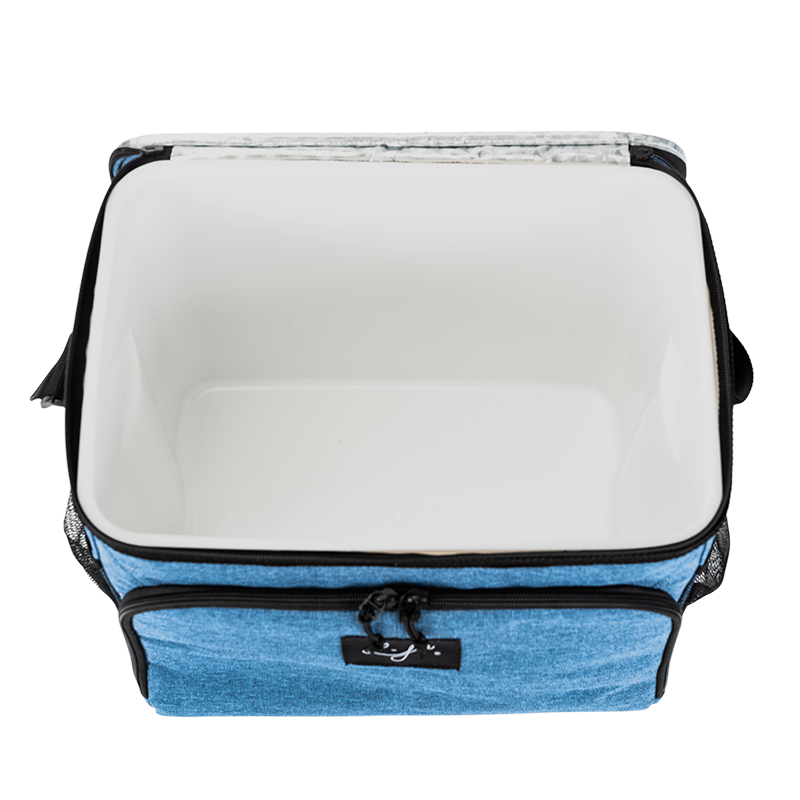 LJ23-CB002 12L Oxford Cloth Hard CoolerA compact 12L hard cooler with wear-resistant Oxford cloth, wipeable lining, and external bucket for picnics, camping, and easy cleanup.View Product →
Backpacks face abrasion, repeated flex, and rain driven against seams. A 420D–600D polyester or nylon with a PU or TPU coating, taped critical seams, and a protected zipper is a sensible baseline. Laptop bags need the same water protection at the opening and base, plus a padded sleeve that keeps a wet outer shell away from the device. For hiking or daypack use, the product card below combines a large-capacity pack format with cooler-bag construction.
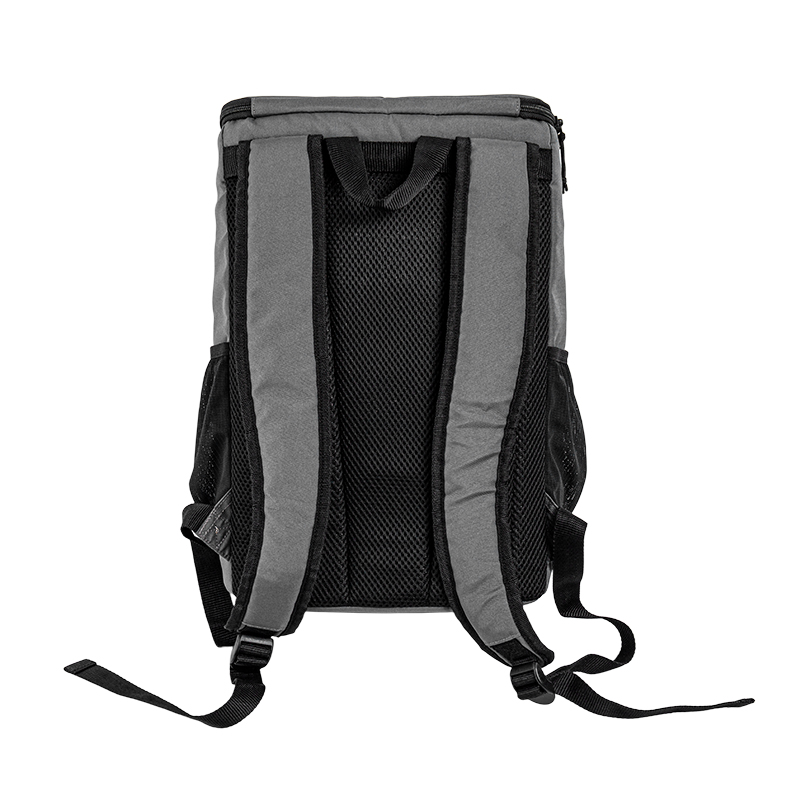 LJ23-CB006 Large-Capacity Hiking Backpack CoolerCombines a large backpack format with insulated pearl cotton, waterproof heat-sealed lining, and padded straps for hiking, camping, and picnics.View Product →
Reusable shopping bags rarely need full waterproofing. A water-repellent RPET or Oxford cloth that wipes clean and survives folding is often enough. If the bag will carry chilled or leak-prone groceries, add a laminated lining and sealed base. The product card below illustrates a foldable, reusable format where material choice, coating, and stitching all affect real-world durability.
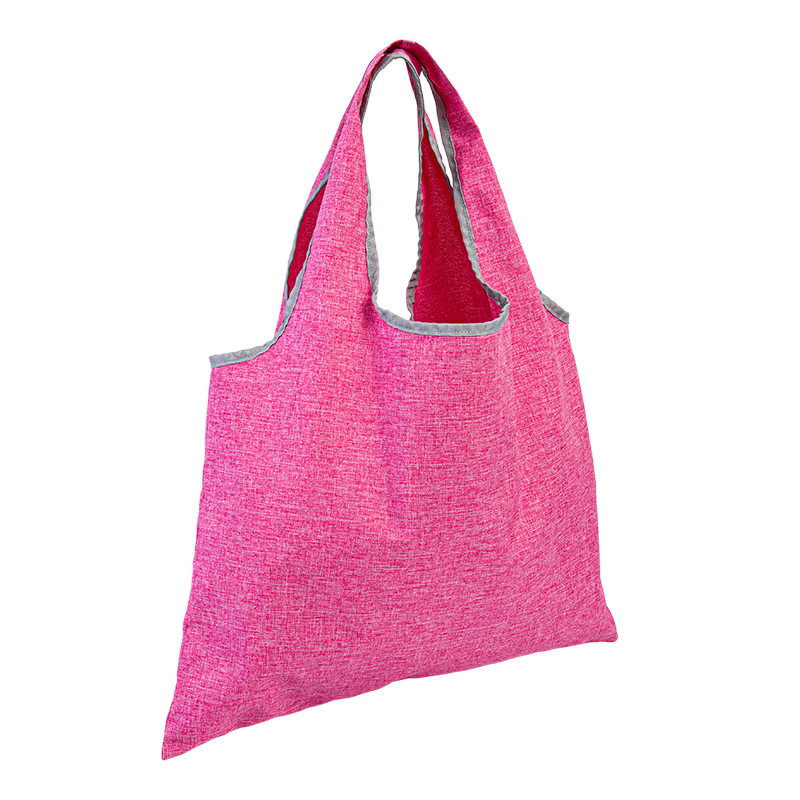 LJ24-002 Foldable Large-Capacity Reusable Shopping BagA sturdy foldable shopping bag with lightweight soft fabric and compact storage, suited to groceries, markets, travel, and repeated everyday use.View Product →
Waterproof claims fail in the field for predictable reasons: unsealed seams, coating cracks, zipper wicking, or a fabric tested flat but never tested as a bag. Build these checks into sampling and pre-production approval.
Suppliers with ISO 9001, Sedex, or retail audits can support consistency, but certification is not a substitute for bag-level testing. Ask for the scope of the certificate and the test report that matches your material and construction.
A clear specification keeps the material conversation grounded. For a typical soft bag, it can be as short as this:
That approach turns bag waterproof material from a marketing phrase into a reproducible purchase order. Whether the project is a cooler bag, a commuter backpack, a laptop sleeve, or a reusable shopping tote, define the wet-weather job first, then choose base cloth, barrier, seam system, and zipper as one package. If you are comparing coated fabrics or welded seams, share your target use and test level so the specification can be matched to a sample. The best material is the one that still performs after the bag is loaded, folded, zipped, and used in the rain.
1. Understanding Shopping Bags Shopping bags are essential tools in modern retail and daily life. They serve as a convenient way to carry groceries, c...
View More1. Introduction In our increasingly mobile and digital world, the laptop has become the central hub of our professional and personal lives. It connect...
View MoreLearn how to choose the perfect crossbody water bottle sling bag — sizing, materials, wearing styles, packing checklist, top features to prioritize, a...
View MoreAn innovative enterprise that continuously strives to have its own brand through its own efforts. bag production factory
Phone: +86-13906735273
Tel: +86-573-85605006
Email: zhouyueliang@L-jie.com
Email: sunny@L-jie.com
Add: No.99 Xinchen Road. Xindai, Pinghu, Zhejiang, China
Copyright© 2025 Pinghu Liangjie suitcase & bag Co., Ltd. All Rights Reserved.
 Custom Luggage Bags Manufacturers


 English
 Français
 Español
 Deutsch
 عربى