 +86-573-85605006
 zhouyueliang@L-jie.com
Content
Walk past any grocery checkout line today and the shift is obvious: shoppers reach for a fabric bag slung over one shoulder instead of grabbing another plastic one. A cotton bag has become the default answer to a problem retailers and consumers both share — how to carry things without adding to landfill waste. Unlike single-use packaging, a well-made cotton bag survives hundreds of trips before it needs replacing.
For brands and retailers, the appeal goes beyond sustainability. A cotton tote doubles as a low-cost marketing surface. Every grocery run, every commute, every gym trip becomes a small, repeated brand impression — something a printed plastic bag simply can't match once it's thrown away after one use.
That said, "cotton bag" covers a wide range of products, from thin promotional totes handed out at trade shows to heavy-duty custom eco-friendly shopping bags built for retail and promotional use that need to survive years of grocery loads. Picking the right version starts with understanding fabric, then moves into construction details that determine how the bag performs once it's actually carrying weight.
Not every bag marketed as "cotton" is built the same way. Three fabric families dominate the wholesale market, and each one trades off weight, durability, and cost differently. Plain cotton is soft and breathable but thinner, which makes it suited to lightweight totes rather than bags meant to haul groceries daily. Canvas is cotton woven more densely, giving it the structure to hold its shape and resist tearing under heavier loads. Oxford cloth, often a cotton-polyester or polyester blend with a basket weave, adds water resistance and abrasion resistance that plain cotton can't offer on its own.
The right pick depends on what the bag needs to survive. A promotional giveaway bag rarely needs Oxford-level durability — plain cotton keeps costs down and still looks good for the few months it's actively in rotation. A bag meant for daily commuting or grocery runs benefits from canvas or Oxford construction, where the added weight per square meter translates directly into fewer torn seams and longer service life.
| Fabric | Durability | Water Resistance | Best Use Case |
|---|---|---|---|
| Plain Cotton | Moderate | Low | Promotional giveaways, light retail |
| Cotton Canvas | High | Low-Moderate | Grocery totes, daily errands |
| Oxford Cloth | High | Moderate-High | Commuting, outdoor use, heavy loads |
Liangjie's Oxford cloth tote bags built for daily commuting and travel sit at the heavier end of this spectrum, while lighter options cover the promotional and casual-use segment of the same product line.
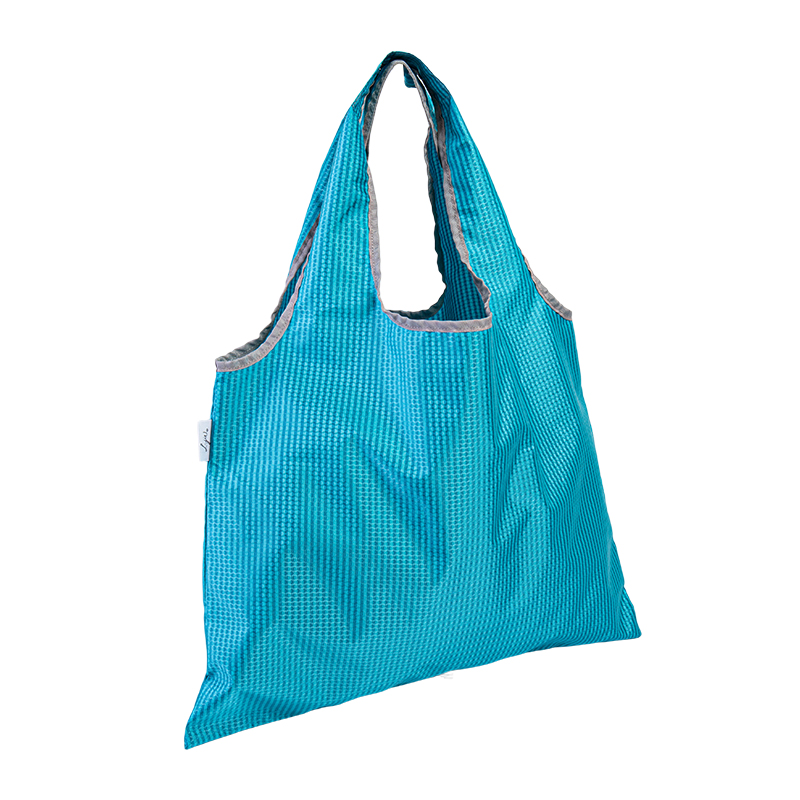
Fabric is only half the equation. Two bags made from identical material can perform very differently depending on construction details that rarely show up in a product photo. Fabric weight, measured in GSM (grams per square meter), is the single best predictor of how a bag holds up under load — anything below roughly 150 GSM tends to feel flimsy once filled, while 200 GSM and above handles groceries and books without sagging.
Handle length and stitching matter just as much. Reinforced stitching at the handle attachment points is where most cheap bags fail first, since that's where weight concentrates every time the bag is lifted. A gusseted bottom — a folded-in base panel rather than a flat seam — lets a bag stand upright and hold a wider range of items without the corners pulling apart over time.
For buyers prioritizing portability, foldable large-capacity shopping bags for compact storage solve a different problem: they need to compress small enough to fit in a glove box or purse while still expanding to full capacity when unfolded. That requires a different stitching approach than a fixed-shape tote, since the fold lines themselves become stress points over repeated use.
Once the fabric and construction are settled, customization is where a generic cotton bag becomes a branded asset. Screen printing remains the most cost-effective option for simple one- or two-color logos at volume, while digital printing handles full-color, photo-quality designs without the setup cost of multiple screens. Embroidery costs more per unit but produces a textured, premium finish that printed ink can't replicate — a common choice for corporate gifting programs where perceived quality matters as much as visibility.
Minimum order quantities and lead times vary by customization method. Embroidery setup typically takes longer than screen printing because of the digitizing step required before production starts, so buyers working against a launch date should factor that lead time in early rather than discovering it after placing an order.
Working directly with a manufacturer rather than a trading intermediary also opens up OEM and ODM flexibility — adjusting handle length, fabric weight, or pocket configuration to match a brand's specific use case, not just the logo printed on a stock bag.
A cotton bag's environmental and economic value depends entirely on how long it stays in use. Cold water hand washing is the safest method across nearly every cotton and canvas construction, while machine washing works for plain, unstructured bags as long as they're turned inside out first. Heat is the main enemy — hot water and tumble drying are the two most common causes of premature shrinkage and shape loss in cotton fabric.
Spot cleaning between full washes extends the interval between deep cleans significantly, particularly for printed or Oxford-finished bags where repeated full immersion gradually wears down surface coatings and graphics. For buyers who want the complete process, a step-by-step guide to washing and maintaining a canvas bag covers stain pre-treatment, drying, and storage in more depth. The official fabric care symbol guidance from the American Cleaning Institute is also a useful reference for decoding the wash, bleach, and drying icons printed on most cotton bag care labels.
A bag that's matched to its actual use case — the right fabric, the right construction, cared for correctly — easily outlasts the plastic alternative it replaced many times over, which is ultimately the entire point of choosing cotton in the first place.
1. Understanding Shopping Bags Shopping bags are essential tools in modern retail and daily life. They serve as a convenient way to carry groceries, c...
View More1. Introduction In our increasingly mobile and digital world, the laptop has become the central hub of our professional and personal lives. It connect...
View MoreLearn how to choose the perfect crossbody water bottle sling bag — sizing, materials, wearing styles, packing checklist, top features to prioritize, a...
View MoreAn innovative enterprise that continuously strives to have its own brand through its own efforts. bag production factory
Phone: +86-13906735273
Tel: +86-573-85605006
Email: zhouyueliang@L-jie.com
Email: sunny@L-jie.com
Add: No.99 Xinchen Road. Xindai, Pinghu, Zhejiang, China
Copyright© 2025 Pinghu Liangjie suitcase & bag Co., Ltd. All Rights Reserved.
 Custom Luggage Bags Manufacturers


 English
 Français
 Español
 Deutsch
 عربى
عربى