 +86-573-85605006
 zhouyueliang@L-jie.com
Content
Heat only moves in one direction once a meal leaves the stove: away from the food and toward whatever is cooler around it. An insulated bag doesn't add heat, it just slows that escape down. The work happens in the layer most people never see, sandwiched between the outer fabric and the lining.
That middle layer is usually closed-cell foam, often somewhere between 3mm and 1 inch thick depending on the bag's size and price point. Foam traps tiny pockets of air, and trapped air conducts heat far more slowly than fabric alone. Many bags add a second trick: a thin layer of aluminized film or foil bonded to the inner lining, which reflects radiant heat back toward the food instead of letting it pass through.
The closure matters almost as much as the lining. A loose flap or weak Velcro seam lets warm air drift out every time the bag shifts, while a tight zipper or buckle keeps that pocket of heat sealed in. Insulation and sealing work together — a thick foam layer with a leaky zipper underperforms a thinner liner with a snug closure.
Most insulated bags hold food above a comfortable eating temperature for two to six hours, and the size of the bag is the biggest single factor in where you land on that range. A compact lunch bag built for one meal cools faster than a larger tote simply because there's less mass and less trapped air inside to buffer the heat loss.
Starting temperature plays a role too. Food packed straight off the stove holds its heat longer than food that's already cooled to lukewarm before it goes in the bag.
| Bag Type | Typical Use | Heat Retention Window |
|---|---|---|
| Compact lunch bag | Single meal, daily commute | 2–4 hours |
| Insulated tote | Multiple portions, family meals | 4–6 hours |
| Backpack-style cooler | Outdoor trips, all-day use | 6–12 hours |
These figures assume the bag is closed and not opened repeatedly. Every time a bag is unzipped, a portion of the trapped warm air escapes and has to be replaced by whatever's in the room or outdoors, which resets part of the clock.
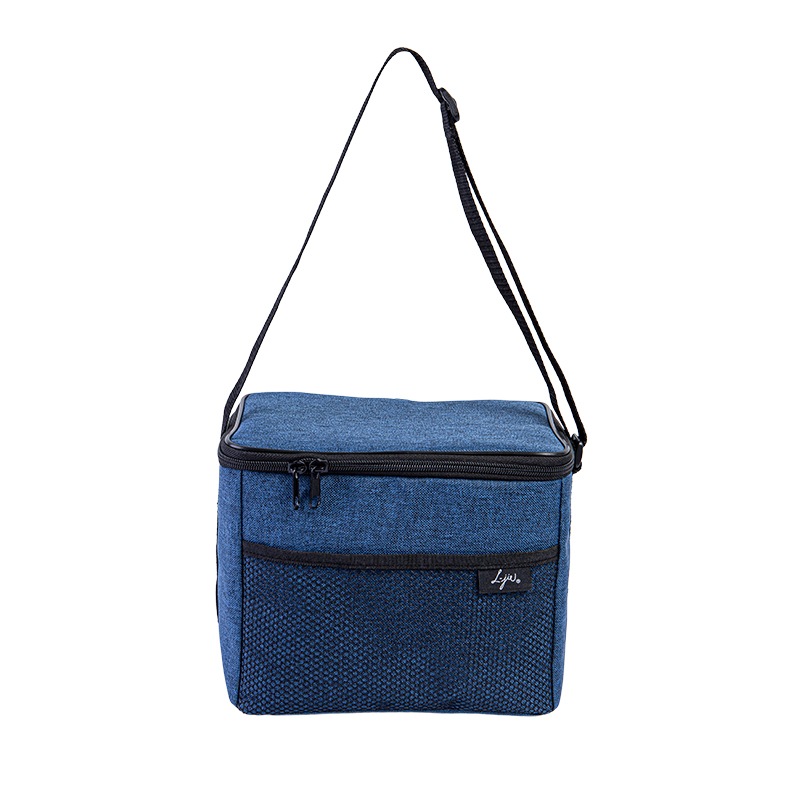
Not every warm meal needs the same bag. A solo commute calls for something compact enough to carry one container without wasted space, while a family dinner or a weekend hike needs more volume and a different kind of structure entirely.
For daily lunches, insulated lunch bags built for daily commuting are sized to hold one or two containers tightly, which actually helps heat retention since there's less air space to fill. Bags like a double-layer lunch bag with extra insulation for hot meals add a second foam wall around the main compartment, which buys extra time before the contents start cooling. If the meal includes a thermos or a taller container, a large-capacity cylindrical lunch bag for bigger portions fits that shape without leaving dead space around the edges.
When the meal is for more than one person, insulated totes designed for family-sized meals trade some of that snug fit for capacity, holding several dishes side by side. A multipurpose insulated tote for grocery runs and potlucks is built for exactly that back-and-forth between the kitchen, the car, and the table.
For anything outdoors, the calculation changes again. A backpack-style cooler built for hiking and outdoor trips distributes weight across both shoulders instead of one hand, which matters once a bag is loaded with several hours' worth of food and water for a longer outing.
A cold bag absorbs some of the heat from hot food the moment it's packed, simply by warming itself up to match. Filling the empty bag with boiling water for a few minutes before packing, then emptying it right before the food goes in, removes that initial heat loss almost entirely.
Reusable heat packs work the same way thermos containers do: they sit alongside the food and slow the rate at which the whole compartment loses warmth, rather than relying on the food's own heat to carry the entire load.
Heat retention isn't only about taste. The USDA's food safety guidance for packed meals recommends keeping hot foods above 140°F (60°C) until they're eaten, and suggests preheating an insulated container with boiling water before adding the meal — the same preheating trick that helps with insulated bags.
Once food drops below that temperature for an extended stretch, the risk isn't just a lukewarm lunch. Bacteria multiply fastest in the range between roughly 40°F and 140°F, which is exactly the window a poorly insulated bag can drift into over several hours. If a meal has clearly cooled well below that mark and has been sitting that way for some time, it's safer to treat it as a loss than to eat it anyway.
Most disappointing lunches trace back to one of a handful of habits rather than a bad bag. Packing food while it's still only warm, instead of properly hot, removes hours of buffer before it even leaves the kitchen.
Leaving a bag half-empty is another common one — the extra air space cools faster than the food does, and that cooler air then pulls warmth from everything around it. Checking the bag every few minutes "just to see" has the same effect in smaller doses, letting a little heat out each time.
A weak closure undoes the rest of the work entirely. Velcro can shift loose over a few hours of carrying and movement, while a sealed zipper holds its grip the whole time, so it's worth checking that detail before relying on a bag for a longer trip. For a broader look at why insulated bags hold up so well across these different uses, the overview on further reading on the general benefits of insulated bags covers the wider picture beyond just keeping food warm.
1. Understanding Shopping Bags Shopping bags are essential tools in modern retail and daily life. They serve as a convenient way to carry groceries, c...
View More1. Introduction In our increasingly mobile and digital world, the laptop has become the central hub of our professional and personal lives. It connect...
View MoreLearn how to choose the perfect crossbody water bottle sling bag — sizing, materials, wearing styles, packing checklist, top features to prioritize, a...
View MoreAn innovative enterprise that continuously strives to have its own brand through its own efforts. bag production factory
Phone: +86-13906735273
Tel: +86-573-85605006
Email: zhouyueliang@L-jie.com
Email: sunny@L-jie.com
Add: No.99 Xinchen Road. Xindai, Pinghu, Zhejiang, China
Copyright© 2025 Pinghu Liangjie suitcase & bag Co., Ltd. All Rights Reserved.
 Custom Luggage Bags Manufacturers


 English
 Français
 Español
 Deutsch
 عربى
عربى