 +86-573-85605006
 zhouyueliang@L-jie.com
A stadium giveaway for 5,000 clear bags, a dive shop asking for welded roll-top packs, and a supermarket chain that wants wipe-clean carriers for its delivery crew can all arrive under one search phrase: backpack PVC. They are three different products with three different prices, and the gap between the cheapest and the most expensive quote usually comes down to four decisions - film gauge, coating weight, seam method, and which plasticizer keeps the sheet flexible.
The short version first: choose clear vinyl film when visibility and wipe-clean surfaces are the point; choose PVC-coated oxford when you need a sewn pack at a low unit cost; choose PVC tarpaulin with welded seams when the bag must survive standing water. The sections below explain how each choice changes price, compliance paperwork, and return rates.
Content
PVC shows up in backpacks in three forms, and mixing them up in a specification sheet is the fastest route to a sample you cannot sell. If you are still deciding on the bag type itself, this guide to backpack selection is a useful starting point before you lock the material.
Two factories can quote the same drawing 30 percent apart because of numbers that never appear in a photo. The table below shows the ranges worth writing into a request for quotation.
| Ranges are typical for mass production; confirm film thickness and coating weight with material test reports rather than trusting a product name. | ||||
| Construction | Typical thickness or weight | Seam method | Water resistance | Cost position |
| Clear vinyl film | 0.25-0.5 mm (10-20 mil) | Sewn with binding or welded | Splash and rain proof when welded | Low to medium |
| PVC-coated oxford 600D | 400-650 gsm | Sewn | Rain resistant; seams leak unless taped | Low |
| PVC tarpaulin | 0.5-0.8 mm, 500-900 gsm | High-frequency welded | Submersible for short periods | Medium to high |
| PVC-coated 1680D weave | 700-900 gsm | Sewn or welded | Rain and abrasion resistant | High |
A 0.1 mm change in film gauge, or a 50 gsm change in coating weight, is often invisible in a photograph but obvious in a landed-cost calculation across 20,000 units.
PVC earns its place in specific applications and loses badly in others. Knowing which side of that line your program sits on prevents most after-sales complaints.
This is the section that sinks otherwise good orders. Under REACH Annex XVII entry 51, DEHP, DBP, BBP, DINP, DIDP and DNOP are restricted to 0.1 percent by weight of the plasticized material - a test on the material, not on the finished bag. In the United States, CPSIA applies the same 0.1 percent limit to eight phthalates in children's products, and California Proposition 65 adds labeling exposure for DEHP.
The practical substitution is straightforward: request DOTP or DINCH plasticizers instead of DEHP, and ask for the plasticizer name in writing on the material certificate rather than accepting a verbal assurance. Build the following into the test plan:
Working with a supplier that already holds ISO quality certification and social compliance audits such as Sedex shortens this stage, because the reports and material declarations are usually already on file.
High-frequency welding only works on a pure PVC surface. A PU top coat will not bond, and neither will a heavily printed area, so the weld path has to be planned at the drawing stage. The acceptance target is simple: the film should tear before the weld peels. If the weld fails first, the tooling pressure, dwell time, or film gauge is wrong.
For sewn PVC bags, every needle hole is a leak path. Specify 8 to 9 stitches per inch, a needle no larger than 100/16, and taped or welded seams whenever a waterproof claim appears in the marketing copy. Useful production tolerances to state in the purchase order: panel cut plus or minus 2 mm, finished bag weight plus or minus 5 percent, film thickness plus or minus 10 percent, and a defined color standard for clear film - water clear, blue tint and smoke tint are all sold as "clear" and cannot be mixed in one shipment.
The same welded-construction logic appears in insulated packs, where a heat-sealed liner keeps meltwater inside the bag instead of wicking along the seams. A large capacity hiking backpack cooler is a good example of how the material thickness and the seam method are chosen together rather than separately.
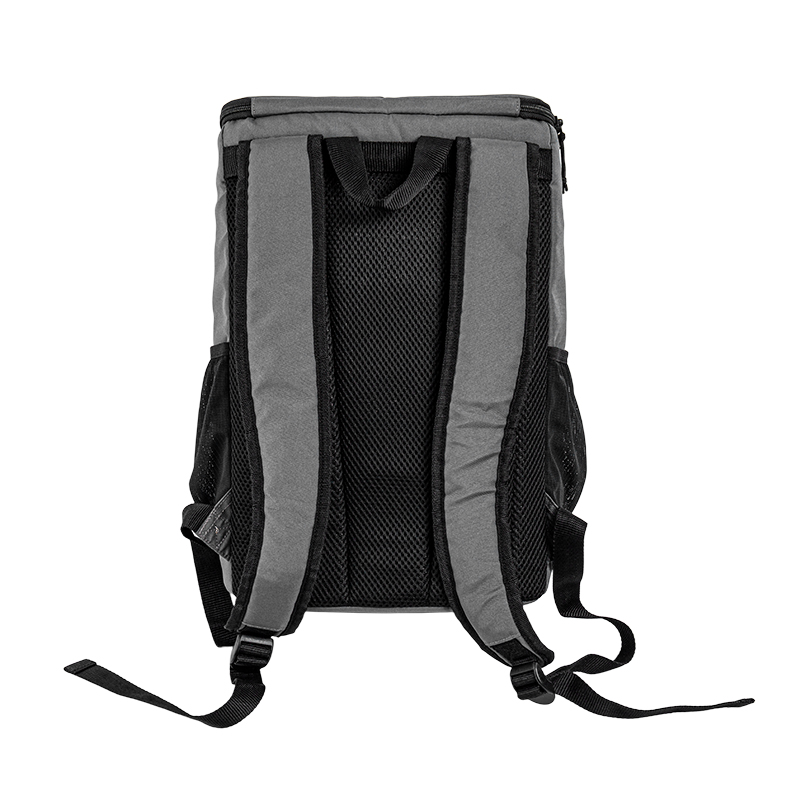 LJ23-CB006 Large Capacity Hiking Backpack CoolerWholesale hiking backpack cooler with thick pearl-cotton insulation, heat-sealed waterproof liner, and durable Oxford polyester, ideal for outdoor food and drink transport.View Product →
Skip PVC if the bag will be carried daily through a cold winter, if the destination market has a PVC phase-out policy, or if the product is for young children and softness, quiet handling and low odor matter more than cost. PU-coated and TPU-coated fabrics cost more per unit but hold up better in those conditions, and they avoid the phthalate conversation entirely.
For a general-purpose daily or promotional pack built on coated woven fabric, a large capacity unisex adult backpack shows how much structure, pocketing and reinforcement can be packed into a sewn construction without turning to heavyweight sheeting.
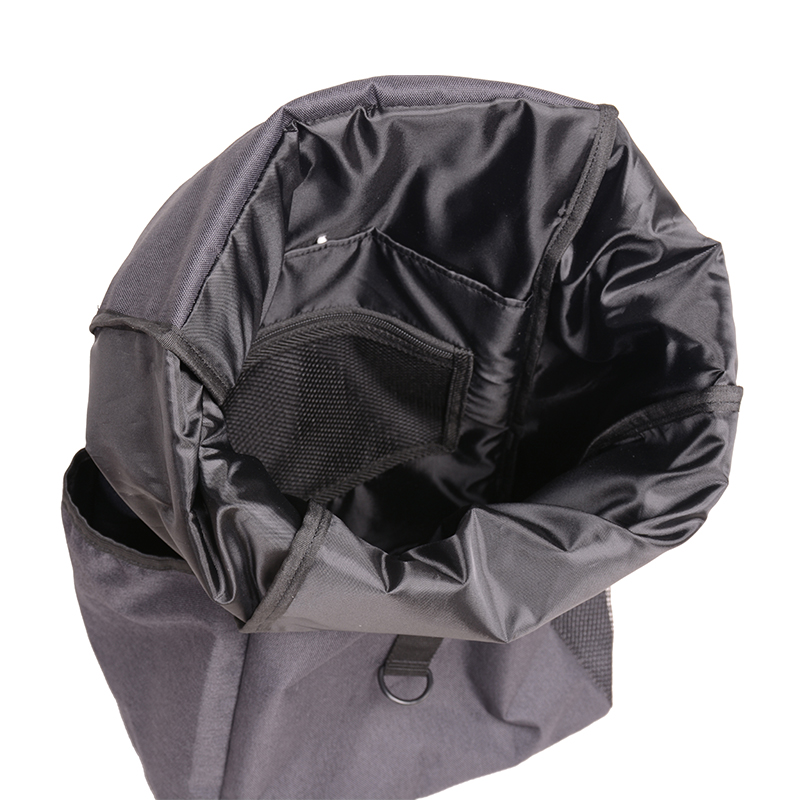 LJ22-008 Large Capacity Unisex Adult BackpackWholesale general-purpose unisex backpack with ergonomic straps and durable Oxford polyester, offering structured storage for daily, school, commuting, and promotional use.View Product →
Commuter and travel programs follow the same reasoning: a coated woven shell with padded compartments usually beats a stiff waterproof film for office use, and it still handles rain. A multipurpose travel backpack with a laptop compartment is the format most buyers settle on when the end user carries electronics as well as clothing.
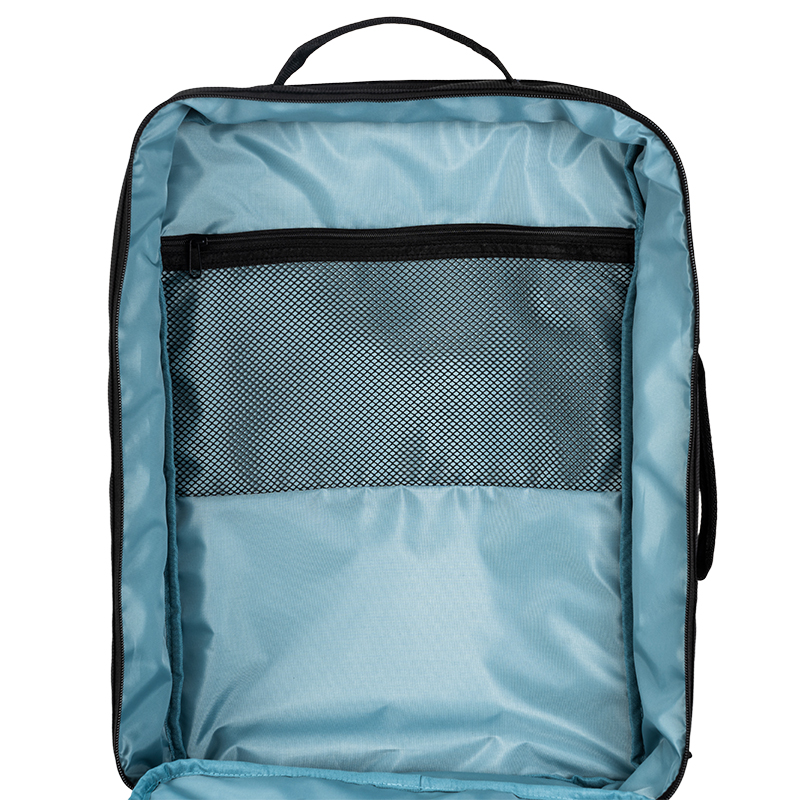 LJ23-003 Multi-Purpose Travel Laptop BackpackWholesale laptop travel backpack with padded 15.6-inch compartment, organizer pockets, durable Oxford polyester, and reinforced stitching for electronics-and-clothing commuter travel.View Product →
Expect 7 to 12 days for a sample once artwork and film specifications are confirmed, and 30 to 45 days for bulk after sample approval. Print screens or heat transfer plates are the main tooling cost for printed PVC, and minimum order quantities typically run 500 to 1,000 pieces per color for printed work and around 300 pieces for plain material. Ordering a single pre-production sample in the exact film you intend to buy is worth the extra week.
Before bulk release, run this checklist on the approved sample:
Send the drawing, the destination market, the storage temperature range and the intended retail channel together in one message. That single step removes most of the back-and-forth, and it lets the factory propose either a welded PVC build or a coated woven alternative with a clear price and test list attached. You can start that conversation through our contact page at any time.
The phrase backpack PVC covers everything from a 0.25 mm clear promotional pack to a 900 gsm welded tarpaulin dry bag, and the material choice is what decides whether the program is profitable. Fix the construction, the plasticizer, the seam method and the tolerances before the first sample is cut, and the rest of the specification usually takes care of itself.
1. Understanding Shopping Bags Shopping bags are essential tools in modern retail and daily life. They serve as a convenient way to carry groceries, c...
View More1. Introduction In our increasingly mobile and digital world, the laptop has become the central hub of our professional and personal lives. It connect...
View MoreLearn how to choose the perfect crossbody water bottle sling bag — sizing, materials, wearing styles, packing checklist, top features to prioritize, a...
View MoreAn innovative enterprise that continuously strives to have its own brand through its own efforts. bag production factory
Phone: +86-13906735273
Tel: +86-573-85605006
Email: zhouyueliang@L-jie.com
Email: sunny@L-jie.com
Add: No.99 Xinchen Road. Xindai, Pinghu, Zhejiang, China
Copyright© 2025 Pinghu Liangjie suitcase & bag Co., Ltd. All Rights Reserved.
 Custom Luggage Bags Manufacturers


 English
 Français
 Español
 Deutsch
 عربى