 +86-573-85605006
 zhouyueliang@L-jie.com
A procurement manager at a retail brand recently asked us whether a 100% recycled polyester folding tote could survive a full season of daily customer use. The short answer is yes, but only if the fabric is specified correctly and the factory controls construction quality. Here is what 100% recycled polyester actually delivers for bags, where it falls short, and how to source it without getting burned.
Content
100% recycled polyester, commonly written as rPET, is a fabric made from post-consumer PET plastic. Most of it comes from water bottles and similar food-grade containers, though used polyester garments and textile waste can also be processed into new yarn. The recycling process sorts the plastic by color, removes caps and labels, shreds it into flakes, washes and dries the flakes, melts them down, and extrudes the molten material into new polyester chips. These chips are then melted again and spun into filament yarn.
When a bag label says "100% recycled polyester," it means the yarn contains no virgin polyester fibers. This matters because many products on the market use 50% or 80% rPET blended with virgin polyester. A 100% claim is the highest level of recycled content and is often required by buyers who need to hit sustainability targets or qualify for recycled-content certifications.
The recycled content percentage tells you where the material came from, but not how it will perform. A 100% rPET fabric can be a thin 210D packing cloth or a heavy 1200D oxford weave. The denier, GSM, coating, and stitching ultimately decide whether the bag is durable enough for your application.
For bag applications, 100% rPET performs very close to virgin polyester in mechanical tests. Tensile strength and abrasion resistance are nearly identical. The important difference is not the fiber's strength; it is how the fabric is constructed and finished.
| Typical property comparison for 600D bag fabric, based on standard textile testing. | |||
| Property | Virgin Polyester | 100% Recycled Polyester | What to Check |
| Tensile Strength | High | Similar | Request a tear strength report |
| Abrasion Resistance | High | High | Martindale test above 20,000 cycles |
| Dyeability | Consistent | Slightly more variable | Pre-production color swatches |
| Water Repellency | Good with coating | Good with coating | Confirm PU coating thickness |
Color consistency is one area where rPET can be harder to control. Because the recycled flakes come from mixed-color plastic, the base color of the polymer varies more than with virgin pellets. A skilled dye house compensates by selecting suitable flake fractions and refining the dye recipe. Always review a pre-production color swatch before bulk production.
Water resistance is another test point. Neither virgin nor recycled polyester is naturally waterproof. A PU or PVC coating must be applied to the fabric backing. For rPET, the coating remains structurally identical, so there is no functional penalty. However, a low-quality coating can peel or crack quickly, so confirm the coating thickness and adhesion.
UV resistance is relevant for cooler bags and backpacks used outdoors. Both virgin and rPET polyester have similar UV stability. If the bags will sit in direct sunlight for long periods, a UV-stabilized fiber or a UV-resistant coating should be specified.
Using recycled polyester reduces reliance on virgin petroleum-based plastic. According to industry data, producing rPET consumes about 59% less energy than producing virgin polyester, and it keeps plastic waste out of landfills and oceans. For buyers under pressure to reduce Scope 3 emissions, this is a meaningful advantage.
The harder conversation is microplastics. Every time a polyester bag is washed or abraded, it sheds microplastic fibers. That applies to both virgin and recycled polyester. Recycling lowers the amount of new plastic created, but it does not stop fiber shedding. A 100% recycled bag is still a petroleum-derived product, and it cannot be recycled infinitely. Many rPET bags today are downcycled into low-value products or end up in landfills at the end of their useful life.
Despite these limitations, 100% rPET remains one of the best available eco-materials for large-volume durable bags. It offers better durability than bioplastics and a lower footprint than virgin polyester. It also gives consumers a visible sustainability message. If you want to compare rPET with other materials in a retail shopping bag context, our guide to shopping bag materials covers the tradeoffs in detail.
Buying a bag from recycled polyester is not just about choosing a fiber. The final product only performs if the fabric, coating, and construction match the intended use. Here is the checklist we use when evaluating suppliers for clients.
An experienced factory will already have test data for rPET fabric, including tear strength, color fastness, and coating adhesion. Use that data as part of your supplier qualification process. It saves time and reduces the risk of arriving at production with an unsuitable material.
Different bag styles place different demands on the fabric. Here is how we evaluate rPET for common bag categories.
Reusable shopping bags are the most straightforward application for 100% rPET. A 420D rPET oxford cloth with a PU coating gives you tear resistance, a lightweight hand feel, and excellent printability for brand logos. These bags need to fold flat and survive repeated loading. The stitching along the bottom and side seams should be double-folded, and the handle attachment must be load-tested.
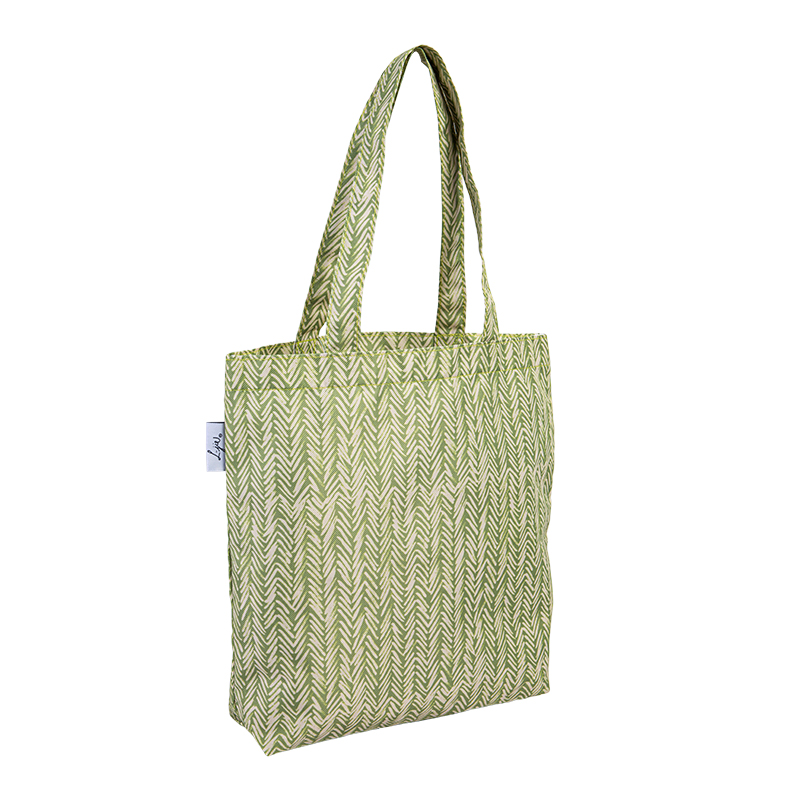 Eco-friendly durable oxford cloth tote bagOur Eco-Friendly Durable Oxford Cloth Tote Bag—a smart, sustainable choice for everyday carrying needs. Made from high-quality, eco-conscious Oxford cloth, this tote b...View Product →
Cooler bags face moisture, abrasion, heavy loads, and temperature fluctuations. A 900D rPET backpack cooler works well for hiking and travel. The outer fabric must be backed with a waterproof liner, and the zippers need to be durable enough to hold insulation in place. RPE also offers good colorfastness for bright outdoor designs.
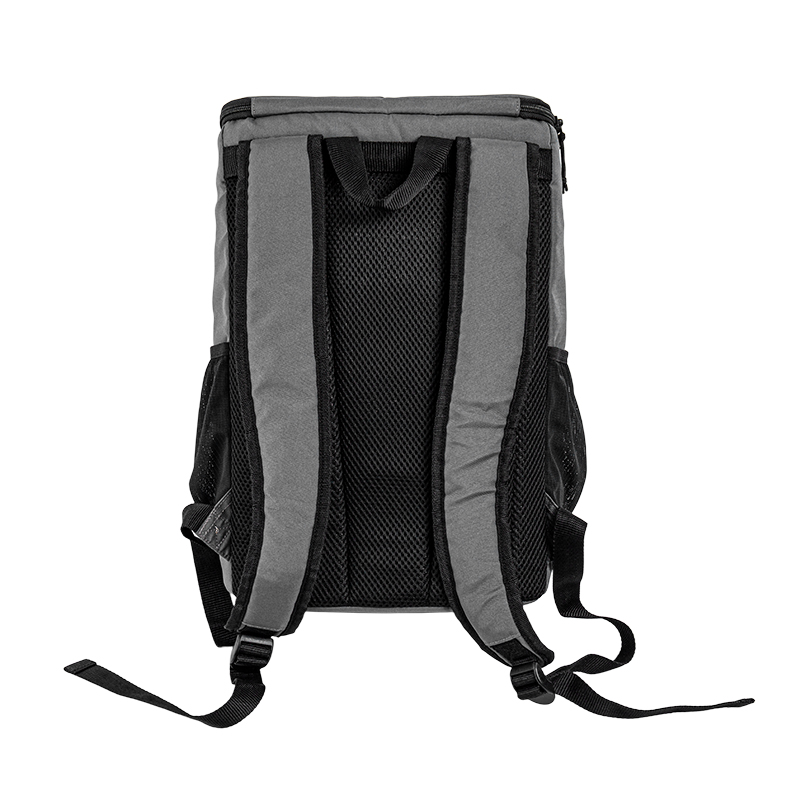 LJ23-CB006 Large capacity hiking backpack coolerThe LJ23-CB006 Large Capacity Hiking Backpack Cooler is your ultimate companion for outdoor adventures such as hiking, camping, and picnics. Designed with both functio...View Product →
Business backpacks use 100% rPET fabric for the outer shell to achieve a professional look with a lower footprint. For a laptop bag, the interior padding and shock absorption matter more than the outer fabric. A 600D to 900D rPET exterior provides a good balance between weight and sturdiness, and it resists scuffs during travel. If you need a versatile option that works for commuting and trips, a 100% rPET travel backpack is a strong choice.
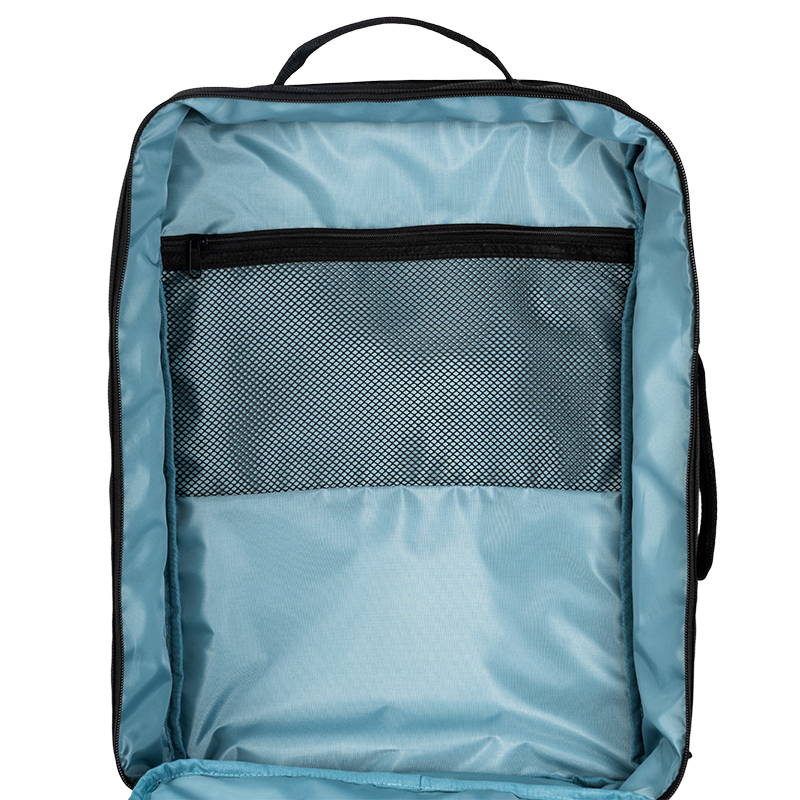 LJ23-003 Multi-purpose travel backpack laptop backpackDesigned with functionality and durability in mind, this LJ23-003 Multi-purpose travel backpack Laptop Backpack offers a smart, organized way to carry your essentials ...View Product →
100% recycled polyester is a practical material choice for a wide range of bags, from foldable shopping totes to hiking cooler bags and business backpacks. The key is not the fiber alone. It is the combination of fabric weight, coating, hardware, and construction quality that determines whether the bag meets your expectations.
When you work with an experienced bag factory, they can help you match rPET fabric specifications to your product's intended use. A factory with a proven record in both recycled and conventional polyester can provide the testing data and pre-production samples you need to make an informed decision. If you want to discuss an order or request a sample, contact our factory team for a quote.
1. Understanding Shopping Bags Shopping bags are essential tools in modern retail and daily life. They serve as a convenient way to carry groceries, c...
View More1. Introduction In our increasingly mobile and digital world, the laptop has become the central hub of our professional and personal lives. It connect...
View MoreLearn how to choose the perfect crossbody water bottle sling bag — sizing, materials, wearing styles, packing checklist, top features to prioritize, a...
View MoreAn innovative enterprise that continuously strives to have its own brand through its own efforts. bag production factory
Phone: +86-13906735273
Tel: +86-573-85605006
Email: zhouyueliang@L-jie.com
Email: sunny@L-jie.com
Add: No.99 Xinchen Road. Xindai, Pinghu, Zhejiang, China
Copyright© 2025 Pinghu Liangjie suitcase & bag Co., Ltd. All Rights Reserved.
 Custom Luggage Bags Manufacturers


 English
 Français
 Español
 Deutsch
 عربى
عربى