 +86-573-85605006
 zhouyueliang@L-jie.com
Ask a bag factory production manager which material matters most to a finished order, and the answer will almost always be the fabric. Whether the product is a cooler bag, a laptop backpack, or a folding shopping tote, the woven fabric determines how the bag looks, how long it survives daily handling, and how much it costs to produce. Understanding what woven fabric actually is, and how it behaves, gives buyers a practical advantage before they request a single sample.
Content
Woven fabric is a cloth structure produced by interlacing two sets of yarns at right angles to each other. The lengthwise yarns are the warp; the crosswise yarns are the weft. Because every yarn runs in a straight, controlled path, woven cloth has a stable grid of intersections that makes it firm, predictable, and easy to cut without fraying along straight lines.
Three features separate woven fabric from other textiles:
This last trait matters in bag manufacturing. Factories plan every pattern piece with seam allowances and edge finishing in mind, so the final product does not lose threads at the stitch lines.
| Woven, knit, and nonwoven fabrics behave differently, which is why woven materials dominate structured bag construction. | |||
| Characteristic | Woven Fabric | Knit Fabric | Nonwoven Fabric |
| Structure | Interlaced yarns | Interlooped yarns | Fibers bonded by heat, chemicals, or needles |
| Stretch | Low to moderate | High | Low |
| Tear behavior | Tears straight along yarns | Runs and creates holes | Tears irregularly |
| Typical use in bags | Totes, backpacks, cooler bags | Stretch linings, straps | Interfacing, disposable bags |
| Manufacturing cost | Moderate to high | Moderate | Low |
Several weave patterns dominate the bags and apparel you see daily. Three deserve particular attention because they appear in most bag specifications.
Plain weave is the simplest and most common. Every warp yarn crosses alternately over and under every weft yarn. The result is a balanced, flat surface with good durability in both directions. Oxford cloth, a plain-weave variation with a basket-like texture, is widely used in shopping bags, cooler bags, and casual backpacks because it offers a crisp appearance at a reasonable cost.
Twill weave creates diagonal lines on the fabric surface by stepping the interlacing points. It has a softer drape and better wrinkle resistance than plain weave while retaining strength. Trousers, workwear, and some reinforced bag panels use twill construction. Denim is the most familiar twill fabric.
Satin weave places long floating yarns on the surface, producing a smooth, lustrous face. Sateen is the same principle using spun yarns. These fabrics look refined, but the floats are more vulnerable to snagging, so they appear in fashion bags and linings rather than in heavy-duty cargo carriers.
Knowing the weave is useful, but buyers usually specify a fabric by its fiber and market name. These four woven fabrics cover most bags produced in Asia and sold globally.
Oxford cloth is a basket-weave variant that combines a grainy texture with solid tearing strength. The 16-inch laptop case in our catalog uses polyester oxford cloth specifically to resist scratches during confined commuting and busy travel days.
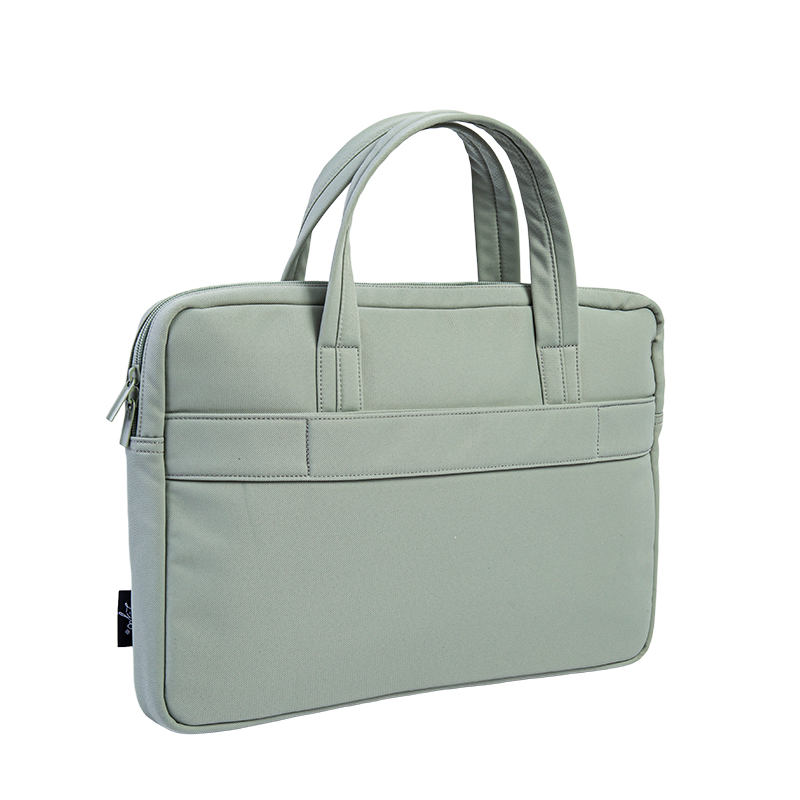 LJ24-015 16-Inch Polyester Oxford Cloth Laptop CaseThis scratch-resistant laptop case pairs durable polyester oxford cloth with soft pearl cotton padding, making it a practical choice for commuters and travelers seeking dependable protection for 16-inch devices.View Product →
Polyester is the workhorse of the soft luggage industry. It is lightweight, quick-drying, available in a wide range of deniers, and easy to print on. Depending on the weaving density and finishing, polyester can feel like delicate taffeta or like heavy weather-proof shell fabric. Most mass-produced backpacks, folding shopping bags, and laptop sleeves rely on woven polyester.
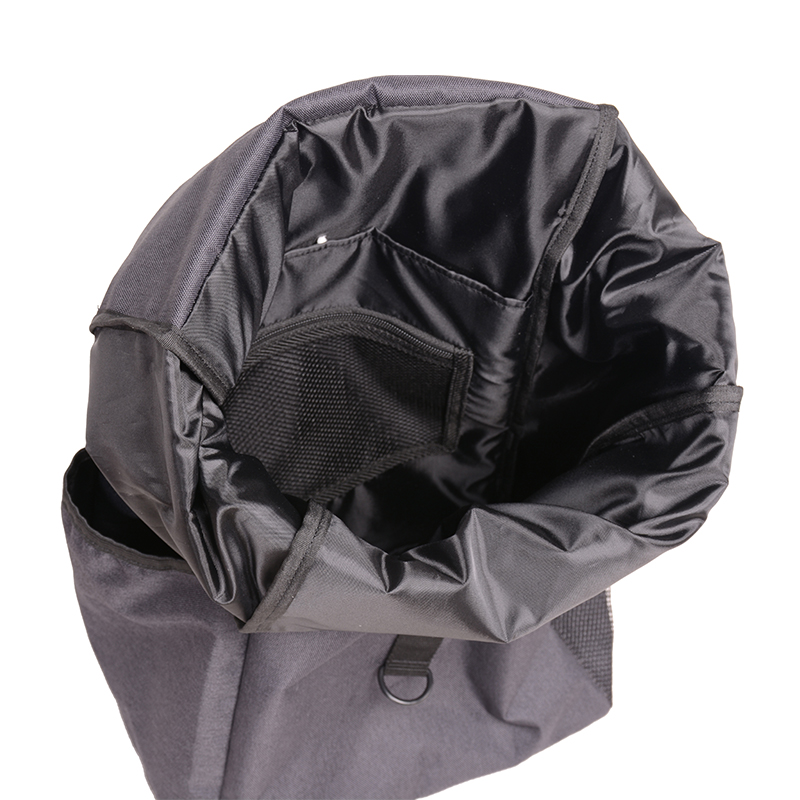 LJ22-008 Large Capacity Unisex Adult BackpackBuilt from durable Oxford polyester with ergonomic straps and a roomy main compartment, this unisex backpack suits work, travel, school, and casual outings while providing all-day comfort.View Product →
Nylon offers excellent abrasion resistance and elasticity. When tightly woven and coated, it deflects moisture and scuffs better than standard polyester at a similar weight. This is why hiking backpacks and outdoor cooler bags often use nylon weaves in their panels.
Canvas is a firm plain-weave fabric, historically made of cotton and now frequently blended with polyester. It has a natural appearance and high structural rigidity, which makes it suitable for tote bags and shopping bags intended to stand upright when filled. The choice between canvas and polyester oxford usually comes down to aesthetics and cost, because both can handle everyday shopping loads.
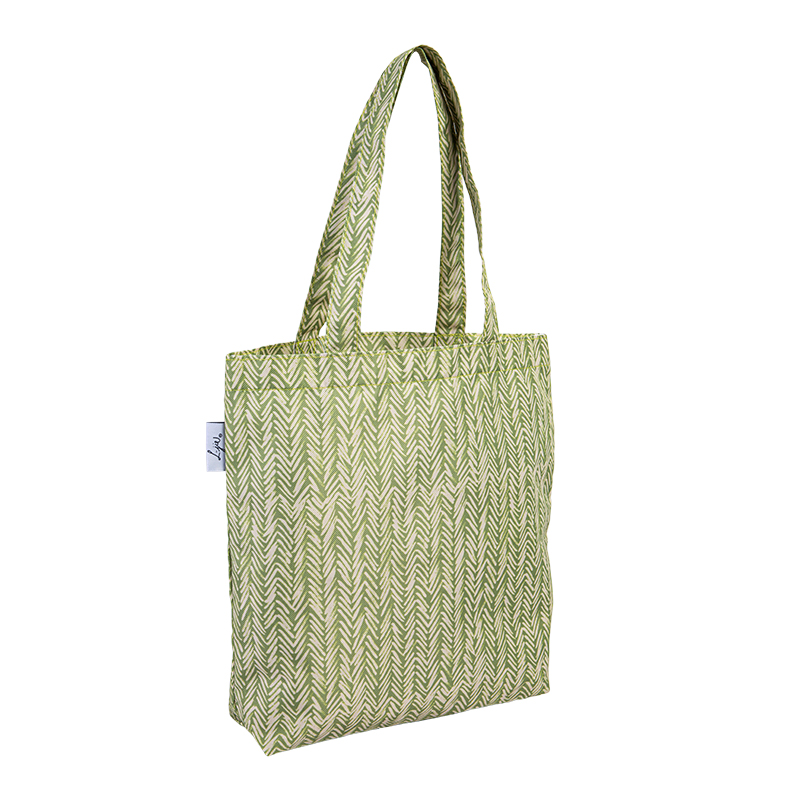 Eco-Friendly Durable Oxford Cloth Tote BagMade from water-resistant, easy-to-clean Oxford cloth with reinforced handles, this reusable tote offers a sturdy, sustainable alternative to single-use bags for groceries, books, and daily essentials.View Product →
For a broader look at how material choice affects reusable shopping bags, our practical guide to shopping bag types, uses, and sustainability covers the main trade-offs.
Even without special equipment, you can tell whether a piece of cloth is woven:
These quick checks are useful when a supplier claims a material specification. If a sample labeled twill shows no diagonal pattern, or a material described as nonwoven stretches like knit, the specification deserves closer attention.
Choosing a type of cloth or woven fabric for a bag is not simply about picking the softest option. The final decision should match the bag's use, the retail environment it will live in, and the production equipment that will stitch it. These are the practical criteria our factory reviews with customers before locking a material:
These factors are exactly why our engineering team asks about intended use before locking a fabric spec. A lunch bag needs a different woven substrate than a laptop sleeve, even when both are made in the same factory.
Fabric specification is only the first half of the equation. The factory's cutting method, needle size, thread type, and edge binding all interact with the weave pattern. A good woven fabric can fail quickly if the seams are sewn with insufficient bite or if the pattern pieces are cut off-grain.
Working with a manufacturer that handles fabric selection support, sample development, mass production, and quality checks reduces the risk of invisible mistakes. Before you commit to a large batch, send your fabric specifications to our engineering team and ask for a pre-production sample with the exact weave, fiber, and finishing noted.
Woven fabric is an engineering material as much as an aesthetic one. Understanding warp and weft, weave structure, fiber type, and finishing puts a buyer in a much stronger position to make decisions that hold up in production and in daily use. The next time you open a spec sheet that says polyester oxford cloth or nylon twill, you will know exactly what that means for the bag, and you can ask the right questions before you place an order.
1. Understanding Shopping Bags Shopping bags are essential tools in modern retail and daily life. They serve as a convenient way to carry groceries, c...
View More1. Introduction In our increasingly mobile and digital world, the laptop has become the central hub of our professional and personal lives. It connect...
View MoreLearn how to choose the perfect crossbody water bottle sling bag — sizing, materials, wearing styles, packing checklist, top features to prioritize, a...
View MoreAn innovative enterprise that continuously strives to have its own brand through its own efforts. bag production factory
Phone: +86-13906735273
Tel: +86-573-85605006
Email: zhouyueliang@L-jie.com
Email: sunny@L-jie.com
Add: No.99 Xinchen Road. Xindai, Pinghu, Zhejiang, China
Copyright© 2025 Pinghu Liangjie suitcase & bag Co., Ltd. All Rights Reserved.
 Custom Luggage Bags Manufacturers


 English
 Français
 Español
 Deutsch
 عربى
عربى