 +86-573-85605006
 zhouyueliang@L-jie.com
Content
Adult backpacks are not one-size-fits-all. The right backpack is the one sized and structured for your specific activity — whether that's commuting with a laptop, hiking over varied terrain, or traveling carry-on only. Buying the wrong category, even from a premium brand, results in discomfort, poor organization, and premature wear.
The adult backpack market has grown significantly: the global backpack market was valued at approximately $19.8 billion in 2023 and is projected to exceed $30 billion by 2032, driven largely by commuter and travel demand. With thousands of options available, understanding the core categories, key specs, and fit principles will save you both money and frustration.
Every backpack design is an engineering trade-off — lightweight hiking packs sacrifice organization for weight savings, while tech commuter packs add padding and compartments at the cost of volume. Knowing your primary use case narrows the field immediately.
These are designed for daily work or school use. Typical volume ranges from 20 to 30 liters, with padded laptop sleeves (usually fitting 13" to 16" laptops), organizational front pockets, and enough structure to hold shape when set down. Popular examples include the Aer Work Pack, Peak Design Everyday Backpack, and Bellroy Classic Plus. Many modern commuter packs also feature hidden back-access zippers for anti-theft protection — a feature particularly useful in urban transit environments.
Hiking packs prioritize load transfer, ventilation, and durability over organizational compartments. Day hikers typically use 20–35 liter packs, while multi-day backpacking starts at 50 liters and can exceed 70 liters for extended expeditions. Key features include aluminum or carbon fiber frame stays, hip belts that transfer weight to the hips rather than the shoulders, and hydration reservoir compatibility. Brands like Osprey, Gregory, and Deuter dominate this space due to their fit systems and warranty support.
Travel packs are designed to function as carry-on luggage, typically sized between 35 and 45 liters to comply with most airline cabin limits. They feature clamshell openings for easy packing, lockable zippers, and harness systems that can be stowed or hidden. The Osprey Farpoint 40, Tortuga Setout, and Tom Bihn Aeronaut 45 are frequently cited as top performers in this category.
This category covers photography packs (with customizable padded dividers), cycling packs (low-profile with chest straps), running vests (snug fit with front soft flasks), and tactical packs (MOLLE webbing, military-grade construction). These are purpose-built for a single activity and perform poorly outside it.
Volume is the most misunderstood spec when buying adult backpacks. Many buyers default to larger packs and then carry more than they should, leading to chronic shoulder and back strain. A useful rule: choose the smallest volume that comfortably holds your essentials.
| Activity | Recommended Volume | Typical Contents |
|---|---|---|
| Minimalist daily commute | 15–20 L | Laptop, notebook, water bottle, essentials |
| Full work/school day | 20–30 L | Laptop, documents, lunch, change of clothes |
| Day hiking | 20–35 L | Water, food, first aid, layers, navigation |
| Weekend carry-on travel | 35–45 L | 2–3 days of clothing, toiletries, laptop |
| Multi-day hiking (2–4 nights) | 45–65 L | Shelter, sleeping system, cooking, clothing |
| Extended expedition (5+ nights) | 65–80 L | Full backpacking kit, resupply capacity |
A common mistake is buying a 50-liter pack for daily commuting. Beyond the unnecessary bulk, research shows that adults carrying loads exceeding 10–15% of their body weight daily are significantly more likely to experience musculoskeletal strain. A well-fitted 25-liter pack encourages lighter packing and better posture.
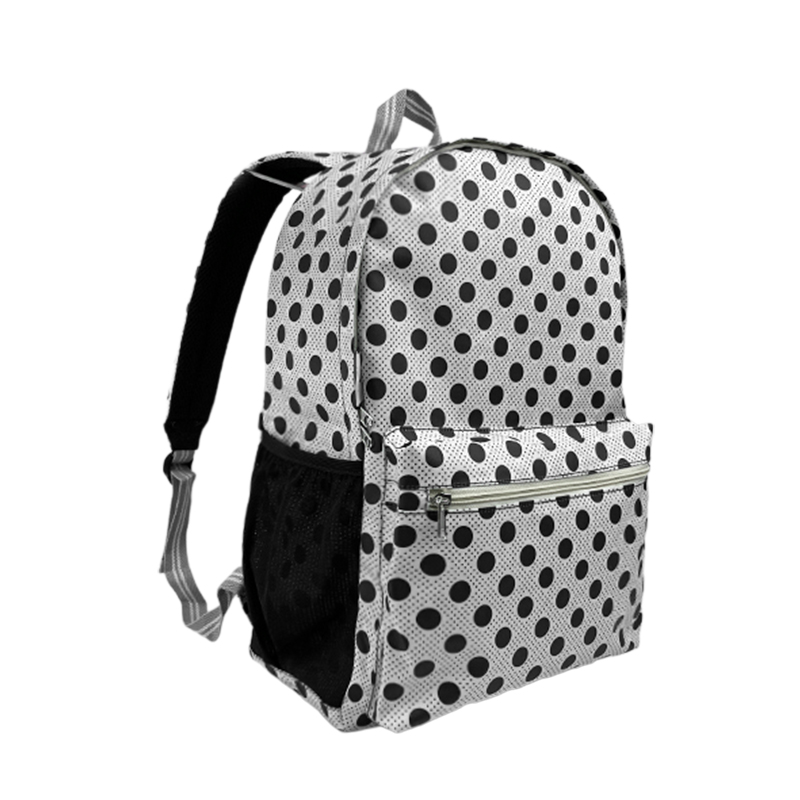
Beyond volume, several structural and material features determine whether a backpack holds up over years of daily use or falls apart after months. Here's what to scrutinize:
The suspension system encompasses the shoulder straps, back panel, and (in larger packs) the hip belt. For commuter packs, look for contoured, pre-curved shoulder straps with at least 10mm of foam padding. For hiking packs carrying over 20 lbs, a load-lifter strap connecting the top of the shoulder strap to the pack creates a critical angle adjustment that prevents the pack from pulling backward. Back panel ventilation — channels or suspended mesh systems like Osprey's AirSpeed — significantly reduce sweat accumulation on warm days.
Most adult backpacks use nylon or polyester, rated by denier (D) — a measure of fabric thread thickness. Higher denier = heavier but more abrasion-resistant. A 420D nylon is standard for commuter packs; hiking and travel packs often use 500D to 1000D for high-wear zones like the base panel. Premium brands use ballistic nylon (1680D) or Cordura for exceptional durability. Ripstop weaves (identified by the grid pattern) add tear resistance without significant weight penalty.
Zippers are the most common failure point in backpacks. YKK zippers are the industry standard for durability — genuine YKK zippers are marked on each pull. Lockable zippers (where a small padlock can thread through two pulls) are valuable for travel packs. Waterproof zippers (coil zippers with a TPU laminate) are found on weatherproof packs but are stiffer to operate and require occasional lubrication.
Most backpacks are water-resistant, not waterproof. A DWR (Durable Water Repellent) coating causes light rain to bead off the fabric but will not prevent soaking in heavy rain or submersion. True waterproofing requires welded seams and waterproof zippers, as found in dry bags or specialized packs. For all other backpacks used in wet conditions, a separate pack rain cover (sold for $15–$40) is the most practical solution.
Consider how you access the pack during the day. Top-loading hiking packs provide maximum volume but require unpacking to reach items at the bottom. Panel-loading packs (with a front-facing zip that opens the main compartment like a suitcase) are far better for daily use and travel. Side water bottle pockets should be deep enough to hold a 1-liter bottle securely — a feature that sounds basic but is poorly executed in many budget packs.
A well-fitted backpack distributes weight evenly across the hips and shoulders, reducing fatigue and preventing injury. Fit is determined primarily by torso length — not overall height — and most quality brands size their packs (XS/S/M/L) accordingly.
Torso length is measured from the C7 vertebra (the bony bump at the base of your neck) to the top of your hip bones (iliac crest). The average adult male torso measures 18–20 inches; the average adult female measures 15–17 inches. Many brands offer gender-specific fits with narrower shoulder straps and adjusted hip belt contouring for women's models.
Adult backpack prices span from under $30 to over $400. The relationship between price and quality is real but not linear — there are strong performers in every tier and poor value at both extremes.
| Price Range | Build Quality | Expected Lifespan | Best For |
|---|---|---|---|
| Under $40 | Basic polyester, generic zippers | 1–2 years with light use | Occasional use, short trips |
| $40–$100 | Better nylon, YKK zippers on some models | 2–4 years daily use | Students, casual commuters |
| $100–$200 | Quality nylon, ergonomic suspension, YKK throughout | 5–8 years with care | Daily commuters, day hikers |
| $200–$350 | Premium materials, advanced suspension, warranty | 8–15 years | Frequent travelers, serious hikers |
| $350+ | Ballistic nylon, lifetime warranty, specialist design | Decade+ or lifetime | Professionals, heavy daily use |
The $100–$200 range represents the best value for most adults who use a backpack daily. Brands like Osprey, Timbuk2, and Fjällräven cluster here and offer repairability and multi-year warranties that budget packs cannot match. Spending $150 on a pack used daily for 6 years works out to roughly 7 cents per day — significantly less than replacing a $50 pack every 18 months.
Rather than an exhaustive list, the following highlights consistently well-reviewed performers in each category, based on real-world durability and user feedback over multiple years:
A quality adult backpack can last well over a decade with basic care. Most premature failures — zipper breakdowns, delaminating coatings, strap fraying — are preventable.
The sheer volume of options — particularly on large e-commerce platforms — means mediocre and misleading products are easy to stumble into. Watch for these warning signs:
1. Understanding Shopping Bags Shopping bags are essential tools in modern retail and daily life. They serve as a convenient way to carry groceries, c...
View More1. Introduction In our increasingly mobile and digital world, the laptop has become the central hub of our professional and personal lives. It connect...
View MoreLearn how to choose the perfect crossbody water bottle sling bag — sizing, materials, wearing styles, packing checklist, top features to prioritize, a...
View MoreAn innovative enterprise that continuously strives to have its own brand through its own efforts. bag production factory
Phone: +86-13906735273
Tel: +86-573-85605006
Email: zhouyueliang@L-jie.com
Email: sunny@L-jie.com
Add: No.99 Xinchen Road. Xindai, Pinghu, Zhejiang, China
Copyright© 2025 Pinghu Liangjie suitcase & bag Co., Ltd. All Rights Reserved.
 Custom Luggage Bags Manufacturers


 English
 Français
 Español
 Deutsch
 عربى
عربى