 +86-573-85605006
 zhouyueliang@L-jie.com
Walk into any airport security line, browse a fashion brand's summer collection, or visit a trade show floor—PVC bags are everywhere. These clear, flexible, and remarkably durable bags have moved far beyond basic packaging. Today they serve as fashion accessories, promotional tools, travel organizers, and retail staples. But what exactly makes a bag a "PVC bag," and why do so many industries keep choosing this material? This guide covers everything you need to know.
Content
A PVC bag is a bag made from polyvinyl chloride—one of the most widely produced synthetic plastics in the world. PVC itself is a solid polymer derived from vinyl chloride gas. On its own, PVC is rigid and brittle. Manufacturers add plasticizers during production to make it soft and flexible, which is the form most commonly used in bags.
The result is a material that can be formed into thin, pliable sheets that are then cut, heat-sealed, and assembled into bags of virtually any shape or size. Unlike woven fabrics, PVC sheets have no fibers to absorb liquid or harbor dirt, which gives them their characteristic smooth, wipeable surface.
PVC bags can be fully transparent, tinted in solid colors, printed with graphics, or given special surface effects such as a holographic or metallic finish. This versatility is a major reason for their widespread use across packaging, fashion, retail, and industrial applications.
Understanding what makes PVC perform well helps explain why it remains a preferred material for bag manufacturers around the world.
Waterproof by nature. PVC does not absorb moisture. Rain, spills, and humidity have no effect on the bag itself or the items stored inside. This makes PVC especially practical for travel, outdoor events, and any situation where contents need to stay dry.
High durability. PVC resists tearing, distortion, and general wear. A well-made PVC bag maintains its shape and appearance through extended daily use, which is why it performs reliably as a reusable product.
Transparency. Clear PVC allows full visibility of bag contents without opening. This is a critical feature in security-conscious environments—stadiums, airports, and concert venues frequently require clear bags—and it also enhances the presentation of products in retail packaging.
Easy maintenance. A damp cloth is all that is needed to clean most PVC surfaces. There is no need for machine washing, special detergents, or drying time.
High customizability. PVC can be produced in almost any color, thickness, or transparency level. It accepts screen printing, digital printing, and embossing well, making it a practical material for branded or custom-designed bags.
Lightweight construction. Despite its strength, PVC is a relatively light material. This is particularly valuable for promotional bags and travel accessories where weight matters.
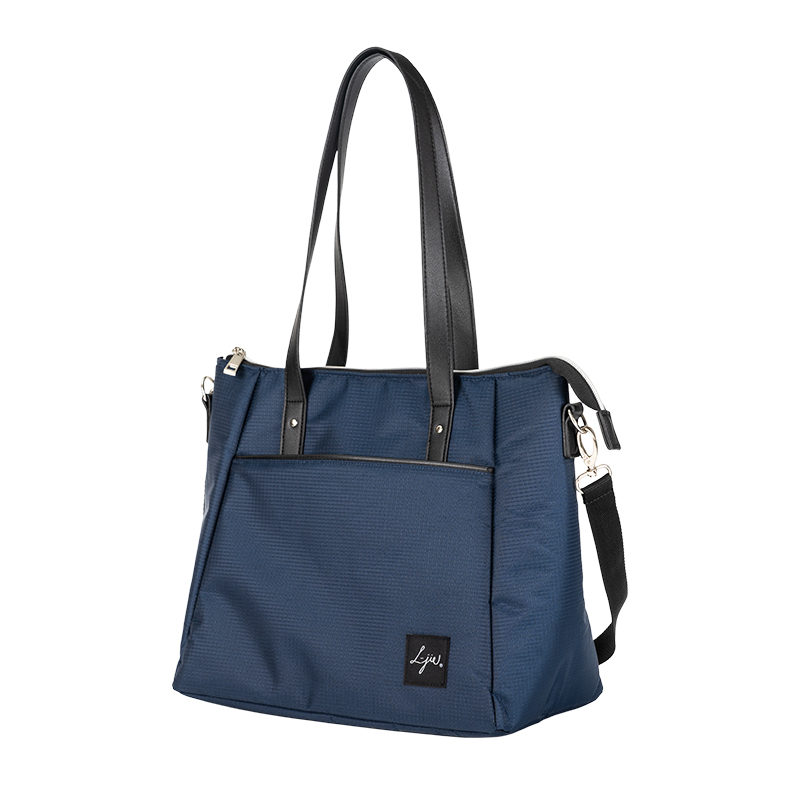
PVC bags come in a wide range of styles, each suited to particular applications.
Clear PVC tote bags are among the most recognized type. Fully transparent with structured handles, they are widely used for stadium events, airport travel, and retail shopping. Their see-through design satisfies security requirements while keeping contents organized and visible.
Colored and frosted PVC bags offer a more opaque or semi-transparent appearance. Brands often choose these for product packaging and retail gift bags, where a degree of concealment adds to the presentation while the PVC material still provides durability and a premium look.
Holographic and laser-effect PVC bags feature a reflective, rainbow-like surface finish. These are popular in fashion retail and cosmetics, where the eye-catching appearance adds perceived value to the product.
PVC cosmetic and toiletry bags take advantage of the material's waterproof and easy-clean properties. They are used to organize makeup, skincare products, and travel toiletries—spills wipe off immediately without damaging the bag.
PVC packaging pouches serve as containers for gifts, candies, small accessories, and promotional items. Their transparency allows the contents to be the focal point, enhancing shelf appeal in retail environments.
PVC as a component material. PVC sheeting is also incorporated into bags made from other materials. Cooler bags, for example, sometimes use PVC for outer panels or trim, taking advantage of its waterproof properties alongside insulating inner layers.
The combination of visibility, durability, and cost efficiency makes PVC bags a practical choice across a broad range of industries.
Fashion and accessories. Major international brands have incorporated clear PVC into handbags, clutches, and totes. The material's modern, minimalist aesthetic fits well with contemporary fashion trends, and it allows creative layering—placing fabric, prints, or objects inside a transparent outer shell.
Events and security. Stadiums, arenas, airports, and schools with clear bag policies rely on PVC totes to satisfy security requirements without inconveniencing attendees. The material's transparency means that prohibited items are immediately visible to staff without requiring bag searches.
Retail and promotional use. Brands ordering promotional bags often choose PVC because it accepts printing cleanly, holds its shape in display environments, and costs less per unit than fabric alternatives when ordered in volume. Trade shows, product launches, and corporate gifting frequently feature custom PVC bags.
Travel and storage. PVC toiletry bags and packing cubes protect clothes and personal items from moisture during travel. Their smooth surfaces also make them easy to wipe down after being placed in overhead bins or hotel bathrooms.
Food and cosmetics packaging. Certain PVC formulations are certified for food contact under FDA and EU standards. These are used for candy packaging, small gift boxes, and specialty food products where product visibility is a selling point.
Choosing the right bag material depends on the specific use case. Here is how PVC compares to common alternatives.
| Material | Waterproof | Durability | Cost | Best For |
|---|---|---|---|---|
| PVC | Yes | High | Low–Medium | Transparent bags, promotional, fashion, travel |
| Cotton / Canvas | No | Medium | Medium | Eco-friendly totes, casual shopping |
| Leather | Partial | Very High | High | Luxury handbags, long-term accessories |
| TPU | Yes | Very High | Medium–High | Premium clear bags, outdoor gear |
| Non-woven fabric | No | Low–Medium | Very Low | Single-use promotional bags |
PVC offers the best balance of waterproofing, print quality, and cost for applications where transparency or a polished appearance matters. TPU is often preferred for premium products that require greater flexibility and a softer feel, though at a higher price point. Cotton and canvas remain the go-to choice when environmental messaging is central to the brand, though they require more care and lack moisture resistance.
For businesses sourcing PVC bags in volume, the manufacturer's capabilities have a direct impact on product quality, delivery reliability, and total cost.
Material quality and certifications. A reputable manufacturer will use PVC that meets international safety standards—particularly important for food-contact applications and products destined for export markets in Europe, Japan, or the United States. Look for suppliers with documented certifications such as ISO quality management, Sedex, or Aeon standards.
Customization capacity. The ability to produce bags in custom sizes, colors, thicknesses, and print designs is essential for branded orders. Confirm whether the factory has in-house design support, prototyping capabilities, and the equipment to handle the specific surface finish or printing method you need.
Production volume and lead times. Established factories with dedicated production lines and outsourcing partnerships can handle larger orders without sacrificing quality. Ask about annual production capacity, minimum order quantities, and realistic lead times before committing.
Range of bag types. A factory experienced with multiple bag categories—not only PVC bags but also cooler bags, laptop bags, and backpacks—typically has broader material knowledge and stronger quality control processes. This expertise carries over into PVC production as well.
Export experience. Manufacturers that regularly ship to multiple international markets understand packaging requirements, documentation, and compliance standards that affect smooth customs clearance. This reduces delays and unexpected costs on the buyer's end.
Asking the right questions upfront—about materials, certifications, sample processes, and past client work—makes it far easier to identify a manufacturer who can deliver consistently at the scale and quality your business requires.
1. Understanding Shopping Bags Shopping bags are essential tools in modern retail and daily life. They serve as a convenient way to carry groceries, c...
View More1. Introduction In our increasingly mobile and digital world, the laptop has become the central hub of our professional and personal lives. It connect...
View MoreLearn how to choose the perfect crossbody water bottle sling bag — sizing, materials, wearing styles, packing checklist, top features to prioritize, a...
View MoreAn innovative enterprise that continuously strives to have its own brand through its own efforts. bag production factory
Phone: +86-13906735273
Tel: +86-573-85605006
Email: zhouyueliang@L-jie.com
Email: sunny@L-jie.com
Add: No.99 Xinchen Road. Xindai, Pinghu, Zhejiang, China
Copyright© 2025 Pinghu Liangjie suitcase & bag Co., Ltd. All Rights Reserved.
 Custom Luggage Bags Manufacturers


 English
 Français
 Español
 Deutsch
 عربى
عربى