 +86-573-85605006
 zhouyueliang@L-jie.com
Content
Ask most Americans and they'll use "backpack" for anything with two shoulder straps. Ask someone in Toronto or Manchester and you might hear "knapsack" or "rucksack" instead, describing the exact same bag on their kid's shoulders. Merriam-Webster defines a knapsack as a bag strapped on the back for carrying supplies, and lists "backpack" right there as the synonym.
So the short answer is: yes, they're the same basic object. The longer answer is that the two words carry different baggage, literally and figuratively, shaped by history, material tradition, and which side of a border you happen to be standing on.
Knapsack is the older word by a couple centuries. It traces back to the Low German "knappen," meaning to bite or snap, paired with "sack." The name stuck because soldiers used these bags to carry rations, food they could grab and eat quickly on the move. That military, provisions-first origin still colors how the word feels today: sturdier, more utilitarian, a little old-fashioned.
Backpack is the newer arrival, coined in America in the early 1900s from the straightforward idea of packing something onto your back. It caught on fast and eventually swallowed up the older term almost entirely in U.S. English, to the point that most Americans under a certain age have never used "knapsack" in casual conversation.
Where a real distinction shows up is in what the bag is made of and how it's built. Knapsacks, true to their historical roots, lean toward canvas or leather, materials that feel rugged and age with visible character but don't handle rain particularly well without a separate waterproof treatment.
Backpacks, especially the versions sold today, are overwhelmingly made from synthetic fabrics like nylon or polyester, chosen for weather resistance and lighter weight. Structurally, backpacks also come in more configurations: frameless designs for light daily use, internal-frame builds for posture support, and external-frame packs built for hauling serious hiking loads. Knapsacks tend to stick to a simpler, single-compartment layout with fewer pockets, which is exactly why they suit people who only need to carry a handful of items rather than a full day's gear.
Geography does more to explain word choice here than any technical spec. In the United States, "backpack" has become the default term for nearly any two-strap bag, and "knapsack" sounds almost quaint by comparison. Cross into Canada, and "knapsack" stays in everyday use for what Americans would simply call a backpack or daypack. Head to the UK, and the conversation shifts again: the generic term there is "rucksack," a word borrowed from German that refers to the back itself.
| Region | Common Term | Typical Connotation |
|---|---|---|
| United States | Backpack | Generic, all-purpose |
| Canada | Knapsack | Everyday daypack |
| United Kingdom | Rucksack | Generic, all-purpose |
Once the terminology settles, the real question is which structure and feature set actually fits how you use the bag day to day. For students and office workers carrying a laptop, cables, and a notebook, a dedicated laptop backpack with a padded compartment protects the device far better than a single-pocket knapsack ever could.
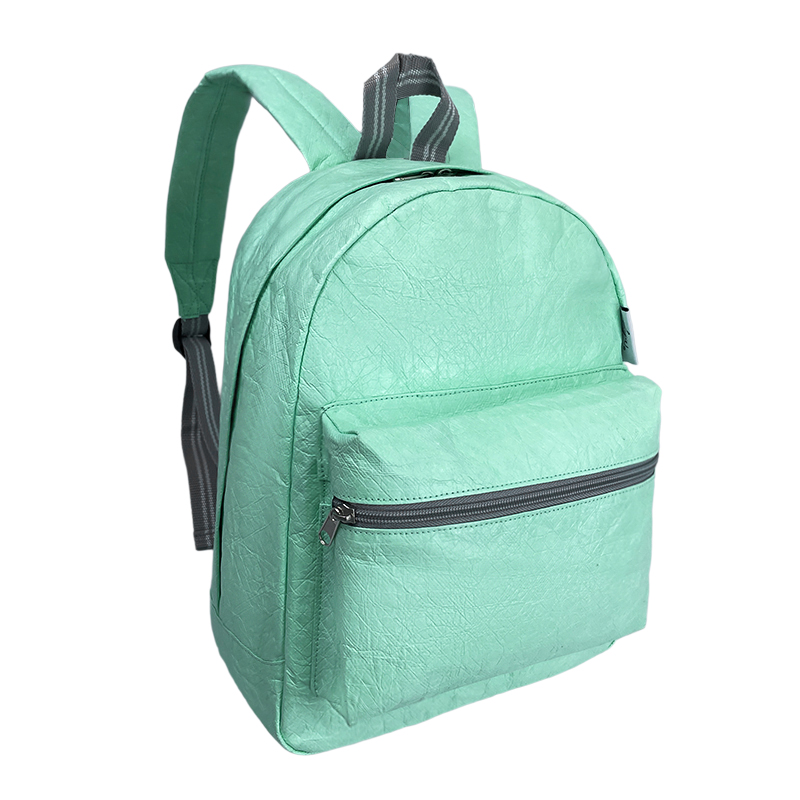
For everyday commuting where you want something straightforward without a dozen compartments to dig through, a simple, practical adult backpack built for daily use hits the knapsack sweet spot of minimal but functional. Parents shopping for school gear tend to prioritize weight over toughness, which is where a lightweight backpack sized for kids makes more sense than either a full-size backpack or a stripped-down knapsack.
If none of these quite match the situation, a fuller breakdown of how to choose a backpack by capacity, carrying system, and material walks through the decision in more depth, and a dedicated guide to laptop backpack protection and ergonomics covers what to look for if device protection is the priority.
| Feature | Knapsack | Backpack |
|---|---|---|
| Typical Material | Canvas, leather | Nylon, polyester |
| Compartments | Few, simple layout | Multiple, varied by type |
| Structure Options | Mostly frameless | Frameless, internal frame, external frame |
| Best For | Minimal daily carry, gym, short trips | Work, school, travel, hiking, laptops |
| Common Region | Canada | US, UK (as "rucksack") |
Strip away the regional habits and the historical baggage, and both words point to the same practical idea: a bag you strap to your back so your hands stay free. Which term you reach for says more about where you're from than what's actually inside the bag.
1. Understanding Shopping Bags Shopping bags are essential tools in modern retail and daily life. They serve as a convenient way to carry groceries, c...
View More1. Introduction In our increasingly mobile and digital world, the laptop has become the central hub of our professional and personal lives. It connect...
View MoreLearn how to choose the perfect crossbody water bottle sling bag — sizing, materials, wearing styles, packing checklist, top features to prioritize, a...
View MoreAn innovative enterprise that continuously strives to have its own brand through its own efforts. bag production factory
Phone: +86-13906735273
Tel: +86-573-85605006
Email: zhouyueliang@L-jie.com
Email: sunny@L-jie.com
Add: No.99 Xinchen Road. Xindai, Pinghu, Zhejiang, China
Copyright© 2025 Pinghu Liangjie suitcase & bag Co., Ltd. All Rights Reserved.
 Custom Luggage Bags Manufacturers


 English
 Français
 Español
 Deutsch
 عربى
عربى